
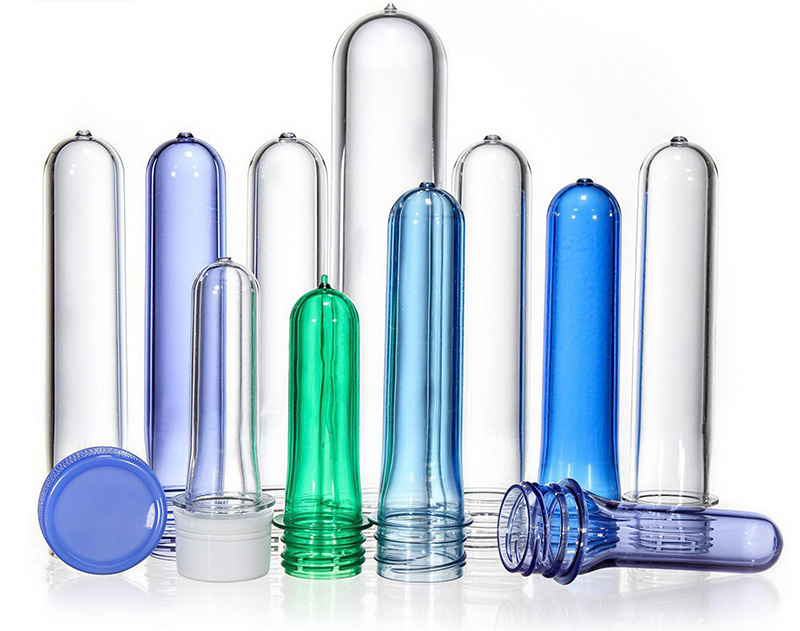
What key factors dictate high-precision PET preform molding quality? Achieving industry-leading PET preform molding quality requires precise thermal management, uniform wall thickness, tight eccentricity control, and balanced hot runner melt distribution. At Gutewei Mould (www.GTWmould.com), our engineered PET preform moulds utilize Swedish S136 stainless steel, double-taper self-locking localization, and valve-gated hot runner systems to deliver concentricity below 0.05mm, cycle times under 10 seconds, and zero Acetaldehyde (AA) accumulation.
1. Introduction: The Technical Criticality of PET Preforms in SBM Production
In high-speed stretch blow molding (SBM), the final strength, clarity, and barrier efficiency of a PET bottle are fundamentally locked into the geometry and thermal history of the molded preform. As beverage, packaging, and personal care industries accelerate lightweighting initiatives, precision PET preform molding has transitioned from standard injection molding into a highly specialized thermodynamic and material engineering domain.
At Gutewei Mould (www.GTWmould.com), a dedicated manufacturer of high-cavity PET preform moulds, our technical solutions focus on overcoming stress distribution flaws, neck distortion, and wall variation before the preform ever reaches the blow molding machine.
2. Key Engineering Pillars of Superior PET Preform Molding
2.1 Wall Thickness Uniformity and Stretch Ratio Optimization
The core geometry of a PET preform determines both the Axial Stretch Ratio (ASR) and Radial Stretch Ratio (RSR). Irregular preform wall thickness directly causes thin spots in blown bottles, leading to compromised top-load strength and burst risks in carbonated soft drink (CSD) applications.
- Axial Stretch Ratio (ASR): Engineered between 2.0 to 3.0 for optimized bottle length orientation.
- Radial Stretch Ratio (RSR): Optimized between 3.0 to 4.5 to maximize tensile strength and hoop stress resistance.
- Gutewei Precision Control: Micro-machined mold cavities maintain wall thickness tolerances within ±0.02mm, guaranteeing uniform resin distribution across all cavities.
2.2 Thread Finish Integrity & Sealing Geometry
Whether producing standard PCO 1881, 29/25, 30/25, or custom wide-mouth preforms, thread dimensional stability is essential for high-speed capping and leak prevention. Gutewei utilizes modular, interchangeable neck ring inserts made from hardened steel with specialized surface polishing to eliminate flash and thread distortion during pneumatic ejection.
2.3 Valve Gate Hot Runner Systems & Low AA (Acetaldehyde) Generation
Thermal degradation during PET resin plasticization generates Acetaldehyde (AA), an organic compound that compromises the taste profile of bottled water. Our advanced hot runner design integrates:
- Equidistant melt flow channels engineered via Moldflow® simulation to ensure identical shear rates across every cavity.
- Individual pneumatic valve-gate control for clean, tail-less gate shut-off.
- Low-shear nozzle geometries that prevent local hot spots and minimize AA formation.
3. Performance Benchmarks: Gutewei PET Preform Mould vs. Standard Industry Specifications
| Engineering Parameter | Standard Market Specification | Gutewei High-Precision Benchmark |
|---|---|---|
| Cavity Capability | 1 to 72 Cavities | Modular Design (Up to 144 Cavities with Independent Locking) |
| Core / Cavity Steel | P20 / 4Cr13 Tool Steel | Swedish Stavax S136 / HRC 48–52 (Vacuum Heat Treated) |
| Concentricity / Eccentricity | ≤ 0.10 mm | ≤ 0.05 mm (Double-taper self-locking system) |
| Neck Finish Types | Standard Water / CSD Necks | PCO 1881, 1810, 29/25, 30/25, 38mm, Wide-Mouth (Custom) |
| Gate Technology | Short Tail / Standard Pin Gate | Pneumatic Valve Gate (Tail-less Cutoff) |
| Mould Service Life | ~3 Million Shots | > 5 Million Shots (Guaranteed with standard maintenance) |
4. Troubleshooting PET Preform Molding Defects: Technical Analysis
1. Preform Eccentricity (Uneven Wall Thickness)
Cause: Injection pressure causing core deflection or unbalanced cooling channel heat exchange.
Gutewei Engineering Solution: Our double-taper positioning geometry locks each core and cavity independently, maintaining axial alignment under high injection pressures up to 1400 bar.
2. Preform Crystallization (Milky Haze Appearance)
Cause: Insufficient cooling rate during the injection phase, allowing PET resin to form crystalline structures.
Gutewei Engineering Solution: Optimized internal cooling channels with spiral water jackets around cavities and cooling pins inside cores achieve rapid thermal dissipation below 140°C.
3. Gate Stringing and Valve Cut-Off Defects
Cause: Inconsistent nozzle tip heating or sluggish pneumatic valve pin movement.
Gutewei Engineering Solution: PID-controlled individual nozzle heaters paired with quick-acting pneumatic valve actuators ensure clean gate seal and zero stringing.
5. Why Choose Gutewei Mould (www.GTWmould.com) as Your PET Solution Partner
As a professional PET preform mould manufacturing plant, Gutewei Mould offers complete customized solutions for global beverage bottling plants, oil packaging companies, and contract molders:
- Weight Optimization (Lightweighting): Redesigning preform Gram weights while maintaining bottle top-load specifications to yield huge annual resin cost savings.
- Precision Machining Standards: Swiss Charmilles EDM and Japanese Makino CNC machining guarantee total spare part interchangeability.
- Turnkey Testing & Support: Every mold undergoes rigorous trial runs with client-specified PET resins before dispatch, complete with full dimensional inspection reports.