
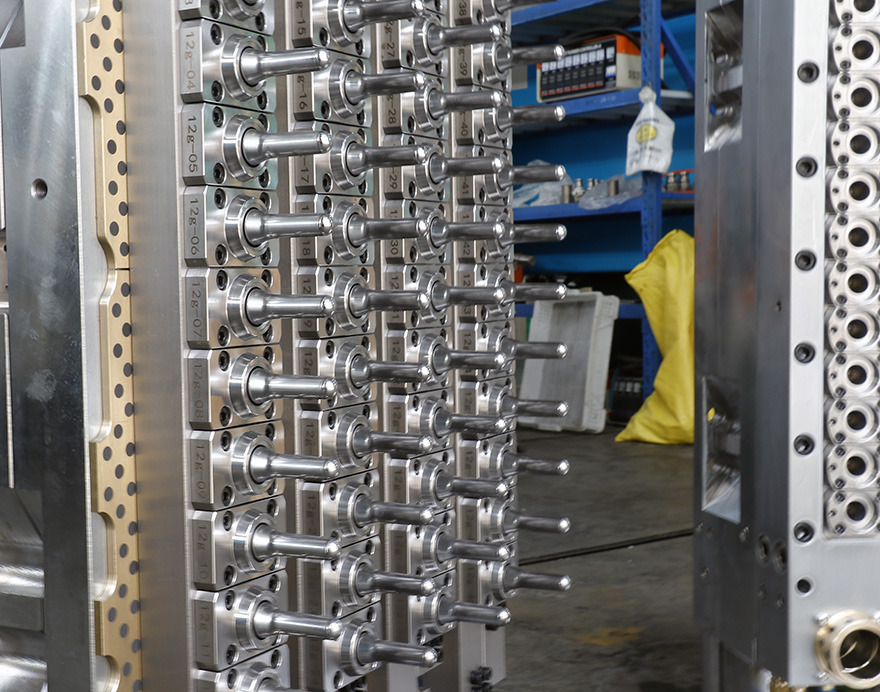
When investing in a PET preform mold, one of the most critical decisions you'll face is selecting the number of cavities. This choice directly impacts your production capacity, initial investment, and long-term profitability. At Gutewei, we help customers worldwide make this decision based on their specific production goals. Here's everything you need to consider.
Understanding Cavity Numbers
PET preform molds are available in a wide range of cavity configurations. Generally speaking, preform molds can have from 8 to 180 cavities . The most frequently used types in the industry are those with 48, 72, 96, 128, and 144 cavities .
Interestingly, market preferences vary by region. In Europe, there is greater demand for molds with 72 and 96 cavities, whereas in America and China, 144-cavity molds are more frequently purchased .
Single Cavity vs. Multi-Cavity: Pros and Cons
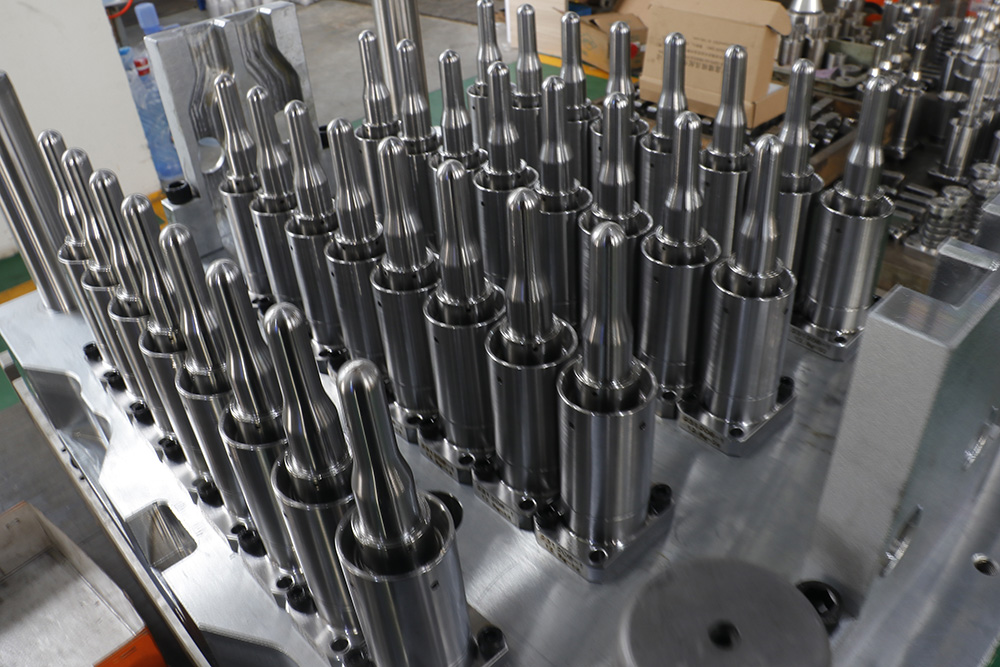
Single-Cavity Molds
Best for: Prototyping, product development, small-batch production
Advantages: Lower initial investment, easier maintenance, greater flexibility for design changes
Limitations: Low production output, higher per-unit cost at scale
Multi-Cavity Molds
Advantages: High production efficiency, lower cost per preform, faster ROI for high-volume runs
Limitations: Higher upfront cost, more complex maintenance requirements
Key Factors That Determine Cavity Number
1. Available Machine Tonnage
The maximum number of cavities is limited by your injection molding machine's clamping force. Here's a general guideline:
500-ton machines: Can handle up to 144 cavities, suitable for producing approximately 140,000 bottles per hour
300-ton machines: Will typically take molds with up to 96 cavities
2. Production Volume Requirements
Calculate your required annual output and work backwards. A higher cavity count dramatically increases productivity. For example, with an optimized 180-cavity mold compared to a 144-cavity mold, production increases from 98,000 to 122,000 units per hour with the same cycle time .
3. Cooling System Efficiency
As cavity numbers increase, cooling system design becomes more critical. At Gutewei, we design cooling circuits not only in relation to the mold size but also considering the geometry of the preform . Proper cooling ensures consistent quality across all cavities and reduces cycle time.
4. Initial Budget vs. Long-term ROI
While a 144-cavity mold requires a higher initial investment, the cost per preform decreases significantly with volume. A high-quality mold with more cavities typically offers better long-term value for growing businesses .
The "Micro-Pitch" Advantage
Modern mold design allows for cavity layout optimization. Through "micro-pitch" layouts, it's possible to maximize cavity count within the same platen space. For instance, a 180-cavity mold evolved from the 144-cavity design by arranging 10 rows of 18 cavities instead of 8 rows, all within the same footprint .
Gutewei's Recommendation
For startups and custom packaging projects, we recommend starting with a 48 or 72-cavity mold—this balances production capability with manageable investment. For established beverage manufacturers, 96 to 144-cavity molds deliver the best economics for high-volume runs.
Contact Gutewei today to discuss which cavity configuration matches your production goals. Our engineering team can simulate your ROI across different cavity options based on your specific volume requirements.