
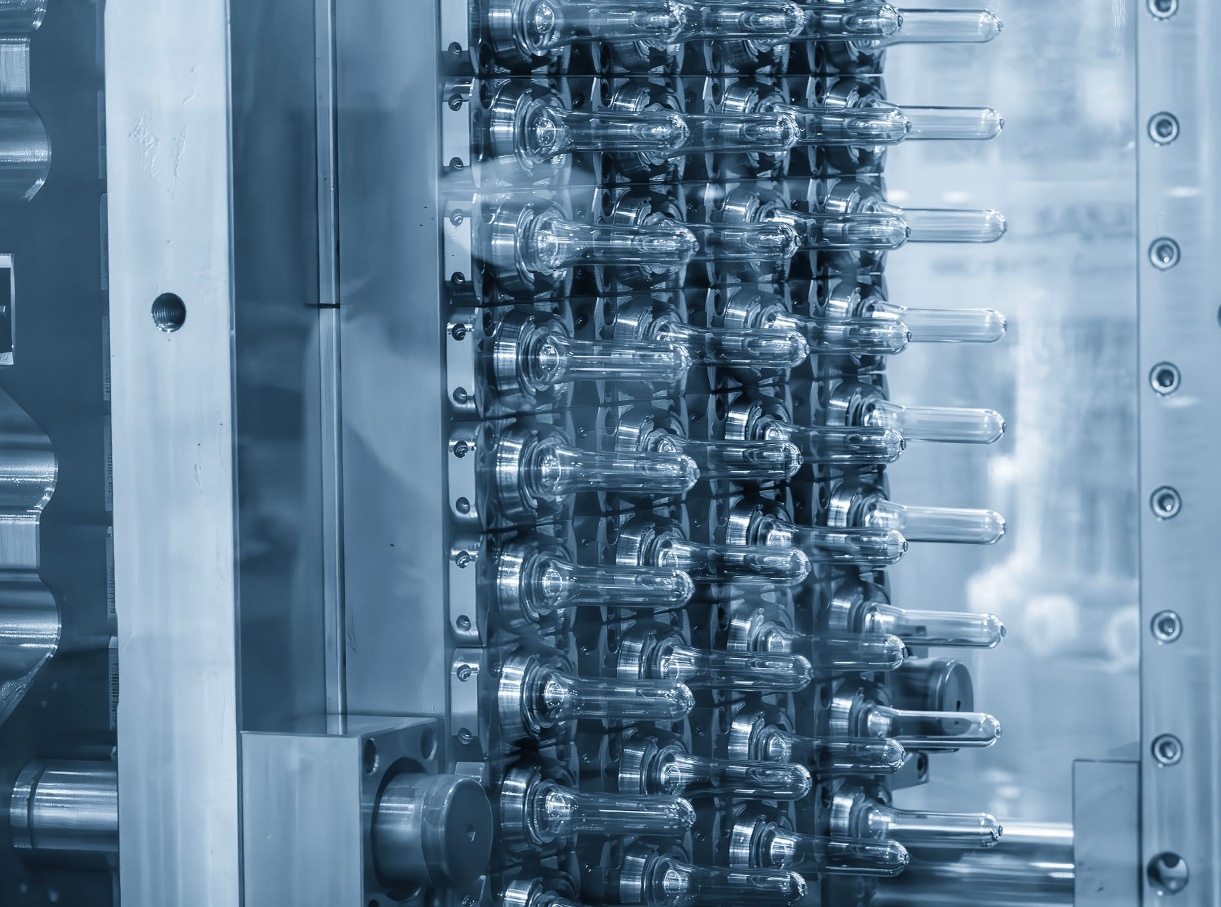
How Much Does a High-Cavity PET Preform Mold Really Cost? Full Price Breakdown for 2026
A Transparent Financial and Technical Procurement Guide for Beverage Bottlers and Packaging Converters by GTWMOULD
Introduction: Navigating CapEx vs. OpEx in High-Cavitation Tooling Investments
For beverage brand owners, contract packagers, and high-volume plastics converters, investing in a high-cavitation Polyethylene Terephthalate (PET) preform mold is one of the most critical capital expenditures (CapEx). In 2026, as resin costs fluctuate, energy prices rise, and sustainability standards demand preform lightweighting, evaluating the true cost of preform tooling extends far beyond the initial purchase price tag.
A lower upfront price often disguises hidden costs: frequent un-scheduled downtime, rapid steel wear, core pin deflection, long cycle times, and high preform rejection rates. As a premier Chinese engineering manufacturer and high-precision tooling authority, GTWMOULD specializes in manufacturing 24-drop to 128-drop high-efficiency PET preform molds. This technical guide delivers a transparent 2026 price breakdown, detailing the primary cost drivers, metallurgical factors, and long-term Operational Expenditure (OpEx) ROI considerations when sourcing high-cavitation tooling.
1. Estimated Price Ranges by Mold Cavitation (2026 Market Analysis)
Preform mold costs scale non-linearly with cavitation count. Increasing cavitation requires exponential precision in manifold balance, hot runner control, sub-micron machining, and clamping force distribution.
| Cavitation Count | Typical Application Range | Estimated Cost Range (USD) | Key Engineering & Tooling Characteristics |
|---|---|---|---|
| 24 to 32 Cavities | Medium-volume regional bottlers, edible oil, niche neck finishes. | $35,000 – $65,000 | Standard hydraulic valve gate system, high-pitch spiral cooling, S136 cavity stacks. |
| 48 to 72 Cavities | High-speed CSD, water, and juice bottling lines. | $75,000 – $135,000 | Naturally balanced FEA manifold, individual pneumatic shut-off pins, BeCu thermal inserts. |
| 96 to 128 Cavities | Ultra-high-volume multinational converters and beverage giants. | $150,000 – $280,000+ | Sub-micron triple-taper alignment, quick-change modular plates, fully synchronized valve gate automation. |
2. The Five Key Cost Drivers in PET Preform Mold Manufacturing
1. Hot Runner Manifold Complexity and Valve Gate Controls
The hot runner system represents up to 35% to 45% of the total mold value. A superior hot runner uses a naturally balanced, FEA-simulated manifold design with polished internal flow channels to guarantee identical pressure drop ($\Delta P \approx 0 \text{ bar}$) across all drops. Pneumatic valve gate shut-off mechanisms with synchronized pin actuation demand ultra-tight machining tolerances to prevent stringing, gate hazing, and Acetaldehyde (AA) spikes ($< 1.8 \text{ ppm}$).
2. Certified Tool Steel Selection and Metallurgy
Material choices directly dictate mold lifespan and maintenance cycles:
- Premium S136 Stainless Steel: Vacuum-hardened to $48\text{--}52 \text{ HRC}$, offering complete corrosion resistance against acidic PET outgassing and cooling line rust. S136 ensures 5 to 8+ million shot lifespans.
- P20 Pre-Hardened Steel: Lower cost option ($28\text{--}32 \text{ HRC}$) suitable for external structural plates, but prone to pitting and scale buildup if used for moulding inserts.
3. Sub-Micron Machining & Alignment Architecture
High-cavitation tooling requires sub-micron CNC milling, Swiss turning, and Wire EDM. GTWMOULD incorporates a proprietary triple-taper self-locking component alignment system across core pins, cavity inserts, and neck split rings, guaranteeing strict concentricity retention:
$$\Delta \le 0.015 \text{ mm}$$
This prevents core deflection under $1200 \text{ bar}$ injection pressures, keeping preform wall thickness variation under $0.03 \text{ mm}$.
4. Advanced Thermal Management (Spiral & Conformal Cooling)
Cooling accounts for over 60% of total injection cycle time. Integrating high-pitch spiral cooling channels and press-fitted Beryllium-Copper (BeCu) alloy inserts ($k \approx 100\text{--}130 \text{ W/m}\cdot\text{K}$) around gate bases and neck finishes increases thermal transfer speed, enabling sub-10-second cycle times on lightweight preform designs.
5. Modular Quick Change (QMC) Integration
Adding Quick Mold Change architecture—such as front-removable neck split inserts and centralized multi-couplers—increases initial CapEx by 10% to 15%, but reduces SKU changeover downtime from 8 hours down to under 2 hours.
3. Calculating Total Cost of Ownership (TCO) and ROI
Focusing strictly on initial acquisition price can lead to severe operational losses. The equation below illustrates Total Cost of Ownership over a 5-year production lifecycle:
$$\text{TCO} = \text{CapEx (Initial Mold Price)} + \text{OpEx (Scrap Rate + Cycle Delay + Unscheduled Downtime)}$$
Financial Impact Scenario (72-Cavity Water Preform Line)
- Low-Cost Competitor Mold: $70,000 initial cost; 13.5s cycle time; 3.5% scrap rate; frequent core realignment downtime.
- GTWMOULD Precision Mold: $110,000 initial cost; 10.2s cycle time; $< 0.15\%$ scrap rate; 5+ million shot longevity.
By compressing cycle times by 3.3 seconds and eliminating 3.35% in wasted resin scrap, the GTWMOULD tool recoups the $40,000 initial price difference within 4 to 6 months of continuous operation, generating hundreds of thousands of dollars in net annual operational profit thereafter.
4. Why Global Buyers Partner with GTWMOULD
Located in China's premier precision manufacturing hub, GTWMOULD provides global beverage converters with high-precision engineering at competitive total acquisition costs:
- Certified Metallurgy: Genuine vacuum-hardened Swedish S136 stainless steel inserts and high-conductivity BeCu components.
- High Reliability Standards: Factory-tested under full production conditions prior to global shipment.
- Turnkey Capabilities: Full compatibility with major European and Asian PET injection molding machines.
Conclusion: Making an Informed Tooling Investment for 2026
Understanding **How Much Does a High-Cavitation PET Preform Mold Really Cost** reveals that true value lies in long-term operational efficiency, fast thermal extraction, sub-micron core stability, and minimal scrap rates. Partnering with **GTWMOULD** ensures access to world-class PET preform tooling engineered for maximum productivity and lowest cost per unit preform.
Contact GTWMOULD's technical engineering sales team today to request a detailed 2026 quotation and custom engineering proposal for your preform molding lines.