
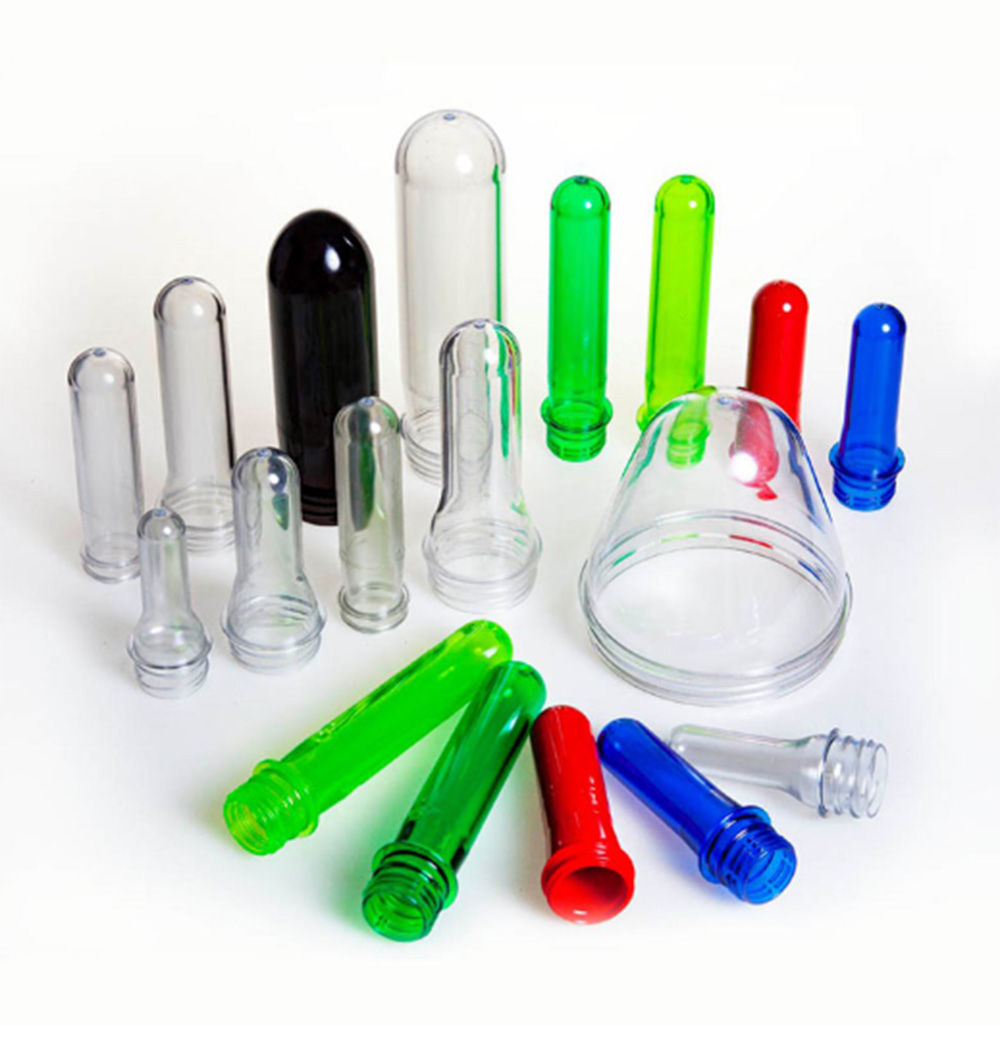
Everything You Need to Know About PET Preform Moulds
A Comprehensive Technical Handbook on High-Cavitation Tooling, Rheology Control, and Precision Manufacturing Engineering by GTWMOULD
Introduction: The Engineering Foundation of Modern PET Container Packaging
Polyethylene Terephthalate (PET) has emerged as the global material of choice for carbonated soft drinks, mineral water, edible oils, pharmaceuticals, and personal care products. Behind every high-performance, crystal-clear PET bottle lies an intensely engineered intermediate precursor: the PET preform. The quality, structural integrity, weight distribution, and optical clarity of the final blown bottle depend fundamentally on the precision of the PET preform mould.
Designing and manufacturing high-cavitation PET preform tooling requires deep expertise across mechanical alignment, metallurgical selection, thermodynamic heat extraction, and polymer rheology. As a premier Chinese manufacturer and global solution provider, GTWMOULD has developed this complete technical manual—Everything You Need to Know About PET Preform Moulds—to explore the key principles, engineering specifications, and architectural parameters required for world-class preform production.
1. Structural Anatomy and Mechanical Core-to-Cavity Centering
High-cavitation PET preform tooling (ranging from 24 up to 144 cavities) operates under immense injection pressures ($1000\text{--}1500 \text{ bar}$) and ultra-fast cycle times. Maintaining concentricity across all cavities is vital to avoiding wall thickness variation (eccentricity), which causes uneven heat absorption during reheating and structural failures during stretch blow molding.
Triple-Taper Self-Locking Component Alignment
To eliminate core shifting under extreme hydraulic and mechanical clamping forces, GTWMOULD utilizes a proprietary triple-taper self-locking component alignment system across every individual cavity stack assembly:
- Sub-Micron Concentricity Tolerances: Alignment between core pin, cavity insert, and neck ring split is held strictly within:
$$\Delta \le 0.015 \text{ mm}$$
- Strict Wall Thickness Security: Total preform wall-thickness eccentricity is held under 0.03mm, guaranteeing uniform resin distribution during downstream biaxial stretching.
- Modular Stack Architecture: Cavities, cores, and neck rings feature independent interchangeable stack modules, enabling fast on-machine component replacements without stripping the entire mold base.
2. Polymer Rheology and Valve Gate Hot Runner Systems
The thermal history of PET polymer during plasticization directly impacts the physical properties of the final container. High shear rates and thermal degradation lead to Acetaldehyde (AA) generation—an organic compound that imparts an off-taste to bottled water—as well as Intrinsic Viscosity (IV) drops that weaken bottle strength.
| Hot Runner Component | Technical Engineering Challenge | GTWMOULD Specialized Solution | Performance Impact |
|---|---|---|---|
| Melt Flow Channels | Uneven shear stress, dead spots, and thermal degradation causing AA spikes. | FEA-optimized, naturally balanced runner pathways with micro-polished interior flow channels. | Uniform velocity and low shear stress across all drops, preserving resin IV and original taste. |
| Injection Gate Assembly | Thermal gate drooling, long gate vestiges, or stringing tails during robot ejection. | Pneumatically actuated individual valve gate shut-off system with hardened needle pins. | Clean, completely flush gate vestige with zero stringing, preventing machine jam-ups. |
| Thermal Control Network | Temperature fluctuations leading to shot-to-shot weight variations across cavities. | Multi-zone PID thermal regulation with dedicated heaters per nozzle tip and manifold zone. | Absolute thermal uniformity across all cavity drops for tight preform weight consistency. |
3. Thermodynamic Design and Rapid Amorphous Cooling Topologies
Cooling accounts for up to 60% of the total injection cycle duration. Furthermore, PET is a semi-crystalline polymer. If molten PET is allowed to cool slowly, it forms crystalline spherulites, resulting in opaque, cloudy white defects that destroy optical clarity.
Hyper-Conductive Cooling Solutions
To freeze the PET polymer in a crystal-clear amorphous state, molten resin must be quenched instantly below its glass transition temperature ($T_g \approx 75\text{--}80^\circ\text{C}$). GTWMOULD incorporates multi-tier thermodynamic cooling topologies:
- High-Pitch Spiral Cavity Channels: Cooling water circuits wrap closely around individual cavity inserts to maximize heat extraction surface area.
- High-Velocity Core Bubbler Systems: Core pins feature optimized internal water channels providing turbulent, high-flow chilling to internal walls.
- Beryllium-Copper (BeCu) Inserts: Press-fitted BeCu alloys with high thermal conductivity are positioned at the neck split and gate areas, dissipating heat up to 10x faster than standard stainless steel.
4. Advanced Metallurgy and Asset Longevity Protocols
High-speed 24/7 manufacturing plants demand maximum wear resistance and corrosion protection against acidic outgassing during PET processing:
- Swedish S136 Tool Steel Inserts: Cores, cavities, and neck rings are crafted from vacuum-hardened Swedish S136 stainless steel ($48\text{--}52 \text{ HRC}$), delivering long-term resistance against corrosion and abrasive mechanical wear.
- Diamond-Like Carbon (DLC) Coatings: Sliding neck ring components feature DLC surface coatings, allowing clean, oil-free mechanical movement without risk of lubricant contamination on preforms.
- Corrosion-Proof AISI 420 Mold Base: Structural plates are constructed from AISI 420 stainless steel, eliminating internal water channel rust and preserving heat transfer efficiency over millions of cycles.
Conclusion: GTWMOULD — Your Trusted PET Preform Solution Partner
Understanding **Everything You Need to Know About PET Preform Moulds** highlights the technical complexity required to achieve high-speed, defect-free PET container manufacturing. Standard general injection molds cannot deliver the sub-micron mechanical alignment, hyper-conductive thermal quenching, and low-shear valve gate control demanded by global packaging brands.
**GTWMOULD** combines decades of specialized engineering experience with state-of-the-art CNC machining centers to design and manufacture high-efficiency PET preform molds that compress cycle times, eliminate material waste, and maximize operational ROI.
Contact GTWMOULD today to consult with our specialized engineering team and elevate your packaging production lines.