
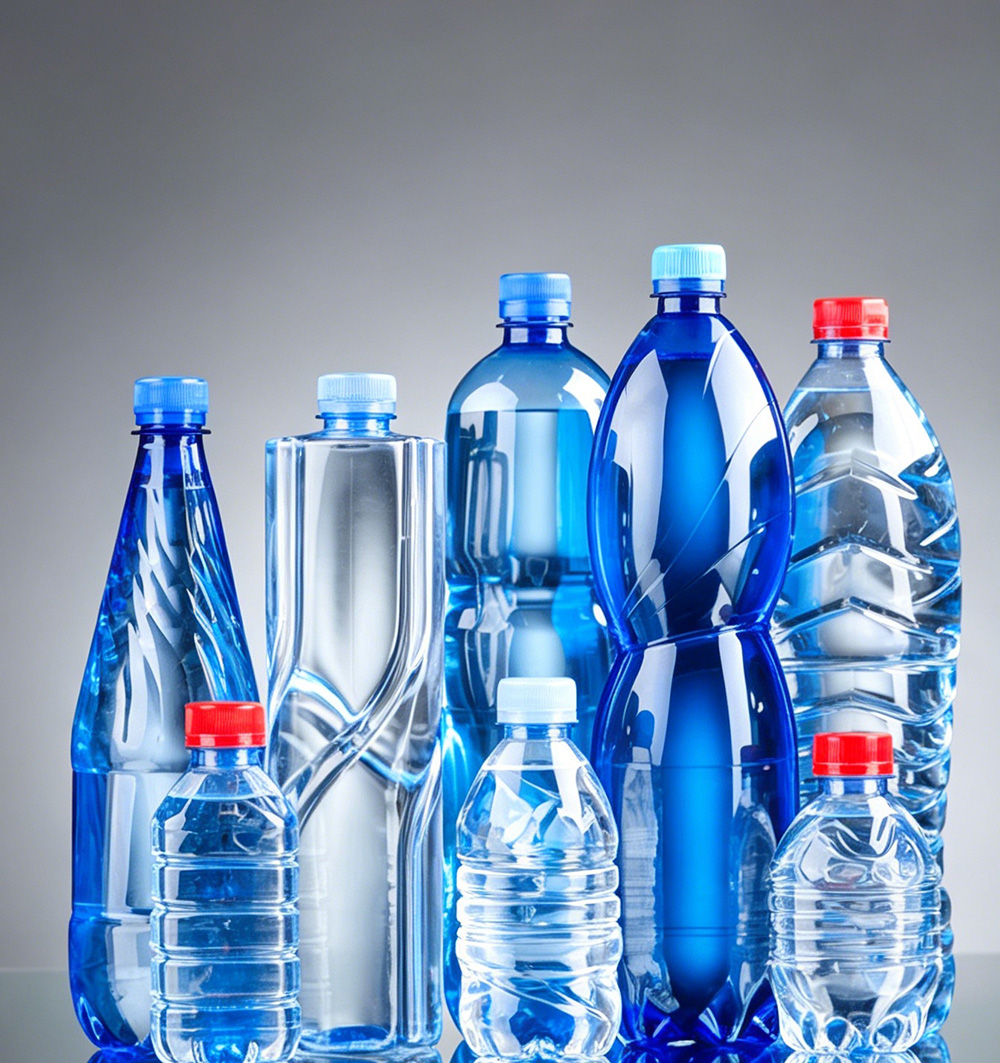
Not all PET is the same. While standard beverage preforms typically use PET with an intrinsic viscosity (IV) of 0.74–0.78 dL/g, certain applications demand high IV PET — materials with IV values of 0.80–0.84 dL/g or higher. These high-viscosity materials provide superior strength, toughness, and barrier properties, making them ideal for carbonated soft drinks, large containers, hot fill applications, and industrial uses. However, high IV PET presents unique challenges: higher melt viscosity, greater injection pressures, slower flow, and different shrinkage behavior. That is why Gutewei designs high IV PET preform molds with specialized engineering — providing a high viscosity material guide and heavy duty preform tools that handle demanding applications with ease.
What Is Intrinsic Viscosity (IV) and Why Does It Matter?
Intrinsic viscosity (IV) measures the molecular weight of PET polymer. Higher IV means longer polymer chains, which translates to:
| Property | Low IV (0.72–0.76) | Standard IV (0.76–0.80) | High IV (0.80–0.84+) |
|---|---|---|---|
| Melt viscosity | Lower | Medium | Higher |
| Injection pressure required | Lower | Medium | Higher |
| Melt flow | Easier | Standard | More difficult |
| Mechanical strength | Lower | Medium | Higher |
| Impact resistance | Lower | Medium | Higher |
| Creep resistance | Lower | Medium | Higher |
| Barrier properties | Lower | Medium | Higher |
| Blow ratio capability | Standard | Standard | Higher |
Applications for High IV PET
| Application | Typical IV | Why High IV? |
|---|---|---|
| Carbonated soft drinks (CSD) | 0.80–0.84 | Pressure resistance, creep resistance |
| Large containers (3L–20L) | 0.80–0.84 | Strength for heavy contents |
| Hot fill beverages | 0.78–0.82 | Heat stability |
| Edible oil bottles | 0.80–0.84 | Barrier properties, thick wall |
| Industrial / chemical containers | 0.82–0.86 | Chemical resistance, strength |
| Premium water | 0.78–0.80 | Higher clarity, strength |
| Returnable / refillable bottles | 0.82–0.84 | Durability, repeated use |
Challenges of Processing High IV PET in Preform Molds
| Challenge | Cause | Gutewei Solution |
|---|---|---|
| Higher melt viscosity | Longer polymer chains | Larger gates, optimized hot runner |
| Increased injection pressure | More resistance to flow | Reinforced mold design, higher clamp |
| Slower cavity fill | Flow resistance | Balanced flow, optimized gate geometry |
| Higher shear sensitivity | Chain scission risk | Low-shear design, smooth transitions |
| Greater shrinkage | Higher molecular orientation | Increased compensation |
| Higher cooling demand | Thicker walls, more heat | Enhanced cooling system |
| More wear on components | Higher forces | Hardened materials, heavy duty design |
Gutewei High Viscosity Material Guide: Technical Solutions
1. Hot Runner Design for High IV PET
| Feature | Gutewei High IV Specification | Benefit |
|---|---|---|
| Channel diameter | Larger than standard (8–12% increase) | Reduces pressure drop |
| Flow path geometry | Gradual transitions, no sharp corners | Lowers shear stress |
| Gate diameter | Larger (0.3–0.5mm increase) | Easier flow, lower injection pressure |
| Nozzle design | Optimized for viscous melt | Consistent delivery |
| Shear analysis | CFD-validated | Prevents degradation |
| Residence time | Minimized | Prevents thermal degradation |
2. Injection System Considerations
| Parameter | Standard PET | High IV PET | Gutewei Recommendation |
|---|---|---|---|
| Melt temperature | 275–285°C | 280–290°C | Slightly higher for flow |
| Injection pressure | 800–1,200 bar | 1,200–1,800 bar | Higher pressure required |
| Injection speed | Standard | Slower (reduces shear) | Controlled filling |
| Holding pressure | Standard | Higher (20–30% more) | Compensates for shrinkage |
| Cooling time | Standard | Extended (10–20%) | More heat to remove |
3. Mold Design Modifications for High IV PET
| Component | Standard Design | Gutewei High IV Design | Why |
|---|---|---|---|
| Gates | Standard diameter | Larger diameter | Reduces injection pressure |
| Flow channels | Standard | Smoother, larger | Reduces shear |
| Venting | Standard | Enhanced | Handles more gas |
| Cooling | Standard | Extended | More heat removal |
| Clamp requirements | Standard | Higher tonnage | Handles higher pressure |
| Shrinkage compensation | Standard | Increased (10–15%) | Different shrinkage behavior |
4. Heavy Duty Construction
High IV PET requires higher injection pressures — up to 1,800 bar compared to 1,200 bar for standard PET. Gutewei heavy duty preform tools feature:
| Feature | Gutewei Heavy Duty Specification | Benefit |
|---|---|---|
| Mold plate thickness | Increased (20–30% thicker) | Reduces deflection under pressure |
| Guide posts | Larger diameter, hardened | Maintains alignment |
| Core rods | Reinforced (larger diameter) | Resists bending |
| Cavity blocks | Thicker wall sections | Prevents deformation |
| Ejector system | Heavy duty pins, larger | Handles higher ejection forces |
| Wear plates | Hardened, replaceable | Longer life |
Heavy Duty Preform Tool: Performance Characteristics
| Parameter | Standard Mold | Gutewei Heavy Duty High IV Mold |
|---|---|---|
| Maximum injection pressure capability | 1,500 bar | 2,000 bar |
| Mold deflection under pressure | 0.05–0.08mm | 0.02–0.03mm |
| Cavity life (high IV service) | 8–10 million cycles | 15–18 million cycles |
| Weight variation | ≤ 0.30% | ≤ 0.28% |
| Typical preform weight range | 10–50g | 30–200g |
| Shrinkage compensation | Standard | Increased |
High IV PET Processing: Material-Specific Guidelines
Drying Requirements
| Material | Drying Temperature | Drying Time | Moisture Target |
|---|---|---|---|
| Standard PET (0.76 IV) | 150–160°C | 4–6 hours | < 0.04% |
| High IV PET (0.80–0.84) | 160–170°C | 6–8 hours | < 0.035% |
| Very High IV (> 0.84) | 170–180°C | 8–10 hours | < 0.03% |
Injection Molding Parameters
| Parameter | Standard PET | High IV PET | Gutewei Recommendation |
|---|---|---|---|
| Barrel temperature (rear) | 260–270°C | 265–275°C | Slightly higher |
| Barrel temperature (front) | 275–285°C | 280–290°C | Higher for flow |
| Nozzle temperature | 270–280°C | 275–285°C | Controlled |
| Injection speed | 100–150 mm/s | 80–120 mm/s | Slower for high IV |
| Holding pressure | 400–700 bar | 600–900 bar | Higher |
| Holding time | 1–2 sec | 2–3 sec | Extended |
| Cooling time | 4–8 sec | 5–10 sec | Extended |
Shrinkage Compensation for High IV PET
| Preform Type | Standard PET Shrinkage | High IV PET Shrinkage | Gutewei Compensation |
|---|---|---|---|
| Lightweight water (10–16g) | 0.4–0.6% | 0.5–0.7% | +10–15% |
| Standard water (16–24g) | 0.5–0.7% | 0.6–0.8% | +10–15% |
| CSD (20–48g) | 0.5–0.8% | 0.7–1.0% | +15–20% |
| Edible oil (30–80g) | 0.6–1.0% | 0.8–1.2% | +15–20% |
| Large containers (80–200g) | 0.7–1.0% | 0.9–1.3% | +20–25% |
Applications Best Suited for Gutewei High IV Preform Molds
| Application | Typical IV | Preform Weight | Gutewei Advantage |
|---|---|---|---|
| 2L CSD (carbonated) | 0.80–0.84 | 48–58g | Pressure resistance, neck strength |
| 5L edible oil | 0.80–0.84 | 70–90g | Barrier properties, thick wall |
| 15L water cooler | 0.82–0.84 | 120–180g | Strength for large container |
| Returnable/refillable bottle | 0.82–0.84 | 30–50g | Durability, repeated use |
| Industrial chemical container | 0.82–0.86 | 80–150g | Chemical resistance |
| Hot fill (juice, tea) | 0.80–0.82 | 24–40g | Heat stability |
Why Global Manufacturers Choose Gutewei for High IV PET
| Buyer Requirement | Gutewei Solution |
|---|---|
| Process high IV PET efficiently | Larger gates, optimized hot runner |
| Handle high injection pressures | Heavy duty construction, reinforced mold |
| Maintain dimensional accuracy | Increased shrinkage compensation |
| Long mold life in demanding service | Hardened materials, heavy duty design |
| Consistent preform quality | Advanced cavity balance, precise cooling |
| CSD pressure performance | Reinforced neck design, high IV optimized |
Real-World Performance: 2L CSD Preform (High IV PET)
| Parameter | Standard Mold | Gutewei High IV Mold |
|---|---|---|
| Preform weight | 52g | 52g |
| PET IV | 0.82 dL/g | 0.82 dL/g |
| Injection pressure required | 1,500 bar | 1,400 bar (reduced) |
| Weight variation | 0.45% | 0.25% |
| Neck creep (24 hrs @ 4 bar) | 1.2% | 0.6% |
| Blow molding reject rate | 1.8% | 0.4% |
| Mold life (high IV service) | 8 million cycles | 16 million cycles |
Quality Control for High IV Preforms
| QC Test | Importance | Gutewei Support |
|---|---|---|
| IV measurement | Verifies material grade | Material verification |
| Weight variation | Critical — high IV is demanding | Cavity balance certificate |
| Neck finish CMM | Critical for CSD sealing | ±0.02mm accuracy |
| Stress crack test | CSD bottles must resist | Material and process optimization |
| Blow test | Verify bottle performance | Sample testing available |
| Shrinkage measurement | Compares to target | Compensation verification |
Ready for High IV PET Processing?
If you are processing high IV PET — for CSD, large containers, or other demanding applications — you need a high IV PET preform mold designed specifically for high viscosity material. Gutewei provides heavy duty preform tools engineered to handle the higher pressures, slower flow, and different shrinkage behavior of high IV PET.
Contact Gutewei today with your preform specifications — target weight, IV value, application type, and injection machine model. We will design a high IV preform mold optimized for your demanding requirements.