
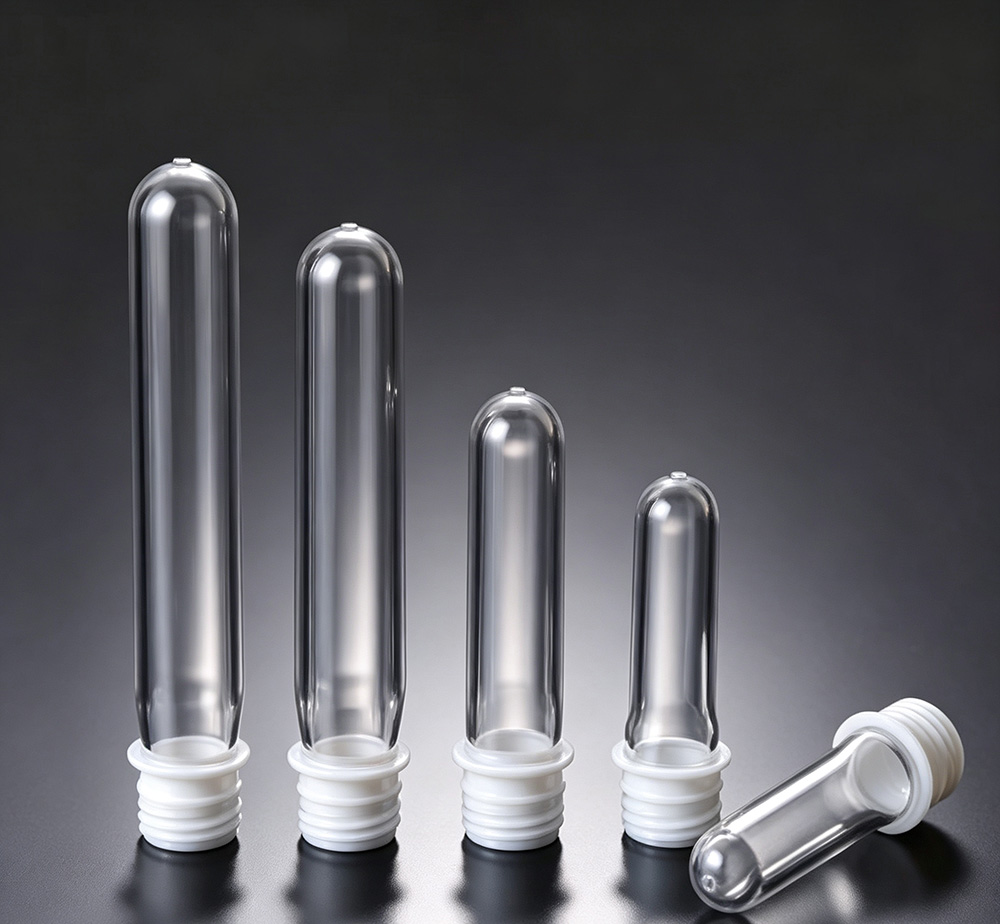
PET Preform Mold for rPET Material, Gutewei Recycled PET Processing, Sustainable Preform Tooling
Sustainability is no longer a trend — it is a requirement. Global brands, governments, and consumers are demanding more recycled content in plastic packaging. For PET bottle and preform manufacturers, this means increasing use of rPET (recycled PET) in their products. But rPET behaves differently than virgin PET — it has lower intrinsic viscosity, higher moisture sensitivity, and different shrinkage characteristics. That is why Gutewei designs PET preform molds for rPET material with specialized recycled PET processing capabilities — delivering sustainable preform tooling that runs rPET efficiently and consistently.
What Is rPET and Why Use It?
| Property | Virgin PET | rPET (Recycled PET) |
|---|---|---|
| Source | Petrochemical-based | Recycled bottles, containers |
| Intrinsic Viscosity (IV) | 0.74–0.82 dL/g | 0.70–0.78 dL/g (typically lower) |
| Moisture sensitivity | Standard | Higher (needs more drying) |
| Color | Clear | May have slight yellow/green tint |
| Contaminants | None | Possible traces from labels, adhesives |
| Cost | Higher | Lower (10–30% less) |
| Environmental impact | High (virgin resource) | Low (recycled resource) |
| Consumer perception | Less sustainable | More sustainable |
Benefits of using rPET:
Reduced carbon footprint (up to 60% less CO₂)
Lower material cost
Compliance with recycled content regulations
Positive brand image
Contribution to circular economy
Challenges of Processing rPET in Preform Molds
| Challenge | Cause | Gutewei Solution |
|---|---|---|
| Lower IV | Polymer chain degradation | Modified injection parameters, optimized design |
| Higher moisture absorption | More hydrophilic | Enhanced drying, modified mold venting |
| Increased shrinkage variability | Inconsistent feed stock | Adaptive process parameters, generous compensation |
| Color inconsistency | Contaminants, mixed batches | Minor colorant adjustment, color management |
| Viscosity variation | Batch-to-batch differences | Robust hot runner design |
| Increased contamination risk | Labels, adhesives, dirt | Advanced filtration, material cleaning |
Gutewei rPET Processing: Technical Solutions
1. Mold Design Modifications for rPET
| Design Feature | Modification for rPET | Benefit |
|---|---|---|
| Gate diameter | Slightly larger (0.2–0.5mm increase) | Accommodates lower viscosity |
| Venting | Enhanced venting (deeper, more vents) | Handles gas release from recycled material |
| Cooling channels | Extended cooling or higher turbulence | Compensates for lower thermal conductivity |
| Shrinkage compensation | Increased (up to 10–15% more) | rPET shrinks differently |
| Machine interface | Adjusted for lower injection pressure | Modified processing parameters |
2. Hot Runner Adjustments for rPET
| Feature | Gutewei rPET Specification | Why |
|---|---|---|
| Channel design | Low-shear geometry | Prevents further IV drop |
| Residence time | Minimized | Reduces degradation |
| Temperature control | Precise (±1°C) | rPET is more temperature sensitive |
| Nozzle design | Optimized for variable viscosity | Handles batch variations |
| Purging system | Enhanced | Removes degraded material |
3. Processing Parameter Adjustments
| Parameter | Virgin PET | rPET (Typical) | Gutewei Recommendation |
|---|---|---|---|
| Drying temperature | 150–160°C | 160–170°C | Higher drying temperature |
| Drying time | 4–6 hours | 6–8 hours | Extended drying |
| Melt temperature | 275–285°C | 270–280°C | Slightly lower (prevents degradation) |
| Injection speed | Standard | Slightly lower | Prevents shear degradation |
| Holding pressure | Standard | Higher | Compensates for lower IV |
| Cooling time | Standard | Extended | rPET is more heat sensitive |
| Ejection temperature | 60–70°C | 55–65°C | Slightly lower for stability |
4. Mold Material Considerations
| Material | Standard PET | rPET Application | Gutewei Recommendation |
|---|---|---|---|
| Cavity steel | S136 (HRC 48–52) | S136 (HRC 48–52) | Standard — good corrosion resistance |
| Wear resistance | Standard | Higher (rPET has more contaminants) | Consider 2316 or hard coating |
| Corrosion resistance | Standard | Higher (contaminant risk) | Ensure stainless steel, coating |
| Polishability | RA ≤ 0.02μm | RA ≤ 0.02μm | Same high standard |
Sustainable Preform Tooling: Beyond rPET
Gutewei supports multiple sustainability initiatives in preform tooling:
1. Multi-Layer (Barrier) Molds for rPET
| Layer Type | Purpose | Gutewei Capability |
|---|---|---|
| Virgin PET outer | Contact with content | Standard |
| rPET middle | Sustainability | Enabled |
| Barrier layer (EVOH, MXD6) | Oxygen barrier | Optional |
| Color layer | Visual identification | Optional |
2. Lightweighting Preform Design
| Benefit | Gutewei Approach |
|---|---|
| Reduced material usage | Optimized wall thickness, reduced weight |
| Lower carbon footprint | Less material to produce and recycle |
| Cost savings | Lower material cost per preform |
3. Bio-PET Compatibility
| Feature | Gutewei Capability |
|---|---|
| Bio-PET processing | Supported (similar to virgin PET) |
| Bio-rPET processing | Under development |
rPET Preform Performance: What to Expect
| Parameter | 100% Virgin PET | 30% rPET | 50% rPET | Gutewei Recommendation |
|---|---|---|---|---|
| Preform weight variation | ≤ 0.25% | ≤ 0.30% | ≤ 0.35% | Acceptable |
| Neck finish accuracy | ±0.02mm | ±0.03mm | ±0.04mm | May require tolerance adjustment |
| Visual clarity | Excellent | Good (slight haze) | Acceptable (some haze) | Consider color correction |
| Process stability | Excellent | Good | Moderate | Robust mold design |
| Mold wear | Low | Moderate | Higher | Consider wear-resistant coatings |
| Blow molding performance | Excellent | Good | Acceptable | May need parameter adjustment |
Quality Control for rPET Preforms
| QC Test | Importance for rPET | Gutewei Support |
|---|---|---|
| IV measurement | Critical — tracks degradation | Material verification |
| Moisture analysis | Critical — must be < 0.04% | Drying recommendations |
| Color measurement | Monitors consistency | Color management |
| AA level | Taste sensitivity (if beverage) | Low AA design |
| Mechanical testing | Tensile, impact | Process optimization |
| Shrinkage verification | Critical — rPET varies | Mold compensation |
Why Global Manufacturers Choose Gutewei for rPET Tooling
| Buyer Requirement | Gutewei Solution |
|---|---|
| Process rPET efficiently | Mold design optimized for rPET |
| Maintain quality with recycled content | Robust design, tighter tolerances |
| Meet recycled content regulations | Supports 25%, 50%, 100% rPET |
| Reduce environmental impact | Sustainable tooling design |
| Lower material cost | Optimized for rPET processing |
| Future-proof production | Flexible for varying rPET content |
rPET Mold Design Checklist
| Check | Gutewei rPET Feature |
|---|---|
| Larger gate diameter | Yes |
| Enhanced venting | Yes |
| Extended cooling | Yes |
| Higher shrinkage compensation | Yes |
| Low-shear hot runner | Yes |
| Corrosion-resistant steel | Yes |
| Modified processing parameters | Yes |
Real-World Performance: 50% rPET Water Preform
| Parameter | Virgin PET | 50% rPET (Gutewei Mold) |
|---|---|---|
| Preform weight | 16.0g | 16.0g |
| Weight variation | 0.22% | 0.28% |
| Neck OD accuracy | ±0.02mm | ±0.03mm |
| Visual clarity | Excellent | Good (slight haze) |
| Blow molding reject rate | 0.4% | 0.7% |
| Mold wear (first 5M cycles) | Minimal | Slightly higher (contaminants) |
| Annual CO₂ savings | — | 30–40% |
Sustainable Preform Tooling: Maintenance Considerations
| Consideration | rPET Impact | Gutewei Recommendation |
|---|---|---|
| Cleaning frequency | Higher (more residue) | Clean more often |
| Vent maintenance | Higher (more gas) | Inspect and clean vents weekly |
| Surface wear | Higher (contaminants) | Monitor cavity surfaces |
| Cooling maintenance | Higher (deposition) | Clean cooling channels regularly |
Ready for Sustainable Preform Tooling?
If you are transitioning to rPET — or planning to increase recycled content — you need a PET preform mold for rPET material designed for recycled PET processing. Gutewei provides sustainable preform tooling that processes rPET efficiently while maintaining quality and productivity.
Contact Gutewei today with your preform specifications — target weight, desired rPET percentage, current material grade, and injection machine model. We will design a sustainable preform mold optimized for your recycled PET requirements.