
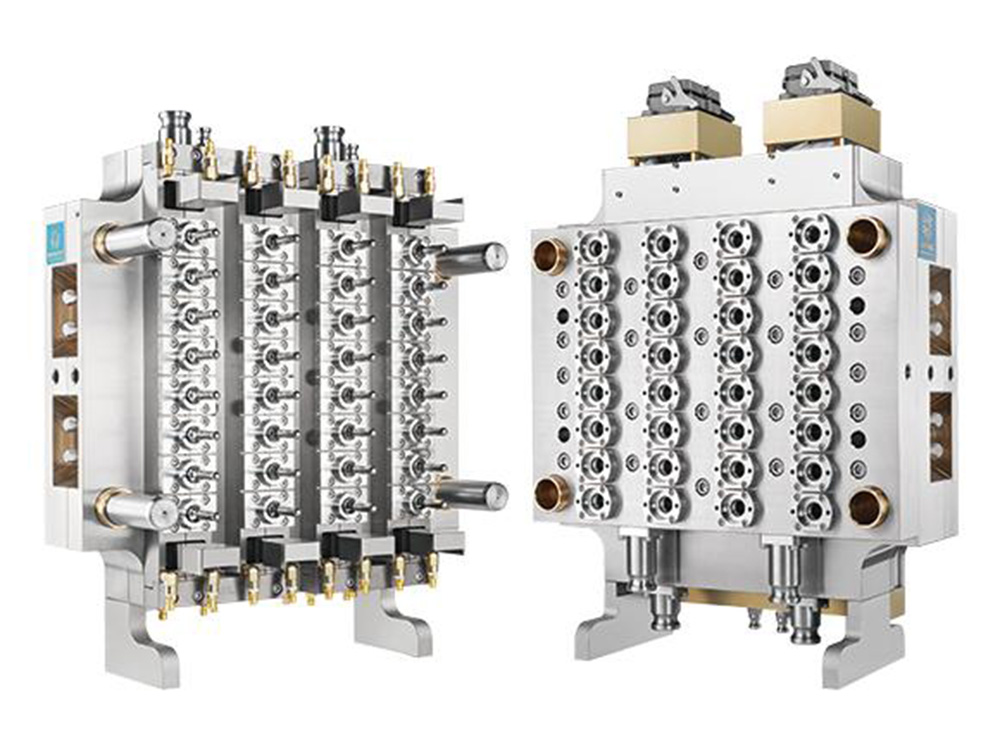
A high-quality PET preform mold is a significant investment — typically representing $50,000 to $500,000+ depending on cavity count and complexity. Like any precision equipment, it requires regular maintenance to deliver consistent performance, maximize service life, and minimize defects. Poor maintenance leads to:
Premature wear — mold replacement every 5–8 million cycles instead of 15–20 million
Quality drift — increasing reject rates over time
Unplanned downtime — costly production stoppages
Higher cost per preform — reduced tool life and increased scrap
This preform mold maintenance guide from Gutewei provides practical tips to extend tool life and reduce preform defects.
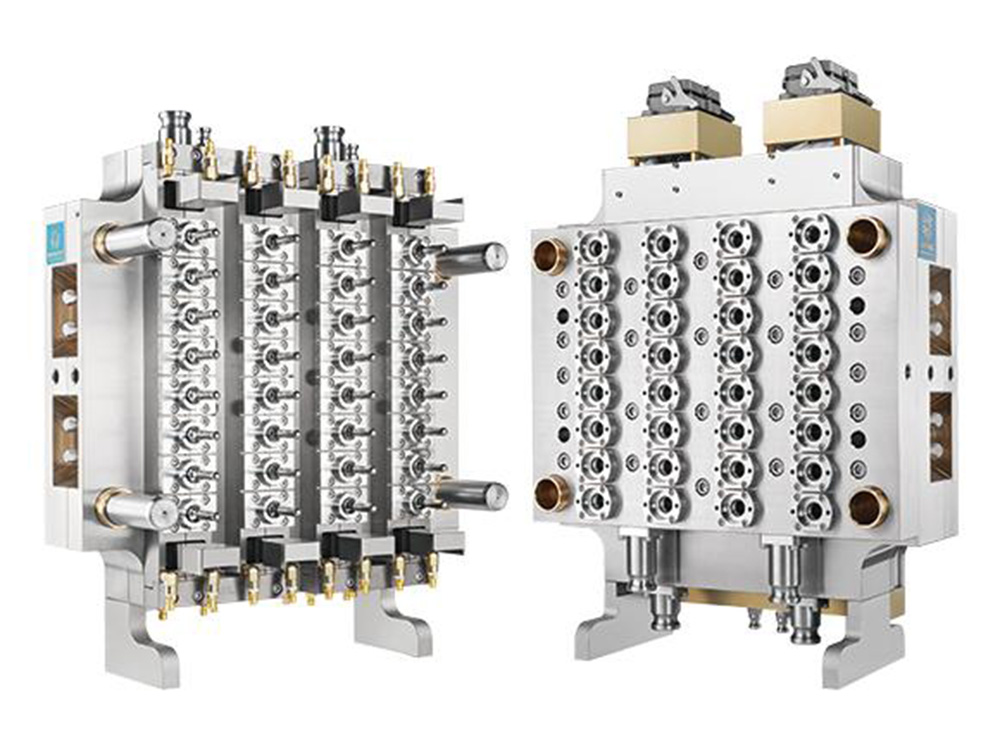
The Cost of Poor Maintenance
| Issue | Consequence | Financial Impact |
|---|---|---|
| Worn cavities | Weight variation, wall thickness drift | Increased rejects, customer complaints |
| Damaged neck rings | Out-of-round neck finish | Capping issues, leakage |
| Dirty vents | Burn marks, short shots | Higher scrap rate |
| Cooling channel scale | Longer cycle times | Reduced output, higher energy cost |
| Worn ejector pins | Sticking preforms, bent pins | Downtime, replacement cost |
| Poor lubrication | Guide wear, misalignment | Mold damage, expensive repair |
Proactive maintenance costs 5–10% of reactive repair costs.
Daily Maintenance Tasks
Before Production Start
| Task | How To | Why |
|---|---|---|
| Inspect mold surfaces | Visual inspection for residue, damage | Prevent defects from starting |
| Check cooling water flow | Verify flow meters, feel return lines | Ensure proper cooling |
| Verify mold temperature | Use thermometer or thermal imager | Consistent preform quality |
| Check ejector system | Manual cycle check | Smooth ejection |
During Production (Every Shift)
| Task | How To | Why |
|---|---|---|
| Monitor preform weight | Weigh 5–10 preforms per shift | Detect cavity balance drift |
| Inspect preform appearance | Visual check for burns, splay, flash | Early defect detection |
| Check for gate stringing | Inspect gate area | Valve gate performance |
| Listen for unusual sounds | Ejector, guide, valve pin noise | Detect wear early |
After Production End
| Task | How To | Why |
|---|---|---|
| Clean mold surfaces | Soft cloth, mold cleaner | Remove PET residue |
| Apply rust preventive | Spray anti-rust agent | Prevent corrosion |
| Leave mold closed with light clamp | Reduce parting line exposure | Protect parting surfaces |
Weekly Maintenance Tasks
1. Clean Cooling Channels
| Step | Action | Frequency |
|---|---|---|
| 1 | Drain water from channels | Weekly |
| 2 | Flush with cleaning solution | Weekly or monthly |
| 3 | Verify flow rate | Weekly |
| 4 | Check for scale buildup | Monthly |
Signs of cooling channel issues:
Longer cycle times
Uneven preform cooling
Increased weight variation
2. Inspect and Clean Vents
| Step | Action | Why |
|---|---|---|
| 1 | Remove vent plates (if removable) | Access vent grooves |
| 2 | Clean vent depths with soft tool | Remove trapped residue |
| 3 | Verify vent depth (0.015–0.025mm) | Too deep = flash; too shallow = burns |
| 4 | Reinstall carefully | Maintain alignment |
Signs of venting issues:
Burn marks on preforms
Short shots (incomplete filling)
Splay marks
3. Inspect Guide Components
| Step | Action | Why |
|---|---|---|
| 1 | Check guide posts for scoring | Wear indicator |
| 2 | Inspect bushings for wear | Ensure alignment |
| 3 | Lubricate with recommended grease | Reduce friction |
| 4 | Verify alignment | Prevent uneven wear |
Signs of guide wear:
Parting line flash
Uneven preform wall thickness
Binding during mold opening/closing
Monthly Maintenance Tasks
1. Verify Cavity Balance
| Step | Action | Why |
|---|---|---|
| 1 | Run 100 consecutive shots | Statistical sample |
| 2 | Weigh all preforms from all cavities | Identify drift |
| 3 | Calculate weight variation | Should be ≤ 0.30% |
| 4 | Investigate any cavities out of spec | Correct before rejects increase |
Cavity balance drift indicates:
Gate wear (different fill rates)
Temperature variation (nozzle or cooling)
Core/cavity wear
2. Inspect Neck Rings
| Step | Action | Why |
|---|---|---|
| 1 | Remove neck ring assembly | Access for inspection |
| 2 | Measure neck finish dimensions | Check for wear |
| 3 | Inspect threads for damage | Capping compatibility |
| 4 | Check crystallized neck rings | Verify crystallinity |
Signs of neck ring wear:
Capping issues (torque variation)
Out-of-round neck finish
Leakage in finished bottles
3. Clean and Inspect Hot Runner System
| Step | Action | Why |
|---|---|---|
| 1 | Purge hot runner with cleaning compound | Remove degraded material |
| 2 | Inspect nozzle tips | Wear or blockage |
| 3 | Check thermocouple function | Temperature accuracy |
| 4 | Verify valve pin actuation (if equipped) | Clean cut-off |
Signs of hot runner issues:
Weight variation between cavities
Gate stringing or vestige
AA level increase
4. Check Ejector System
| Step | Action | Why |
|---|---|---|
| 1 | Inspect ejector pins for wear | Sticking or bent pins |
| 2 | Check ejector plate alignment | Uneven ejection |
| 3 | Lubricate ejector components | Smooth operation |
| 4 | Verify ejector stroke | Proper preform ejection |
Signs of ejector issues:
Sticking preforms
Bent preforms
Preform damage
Quarterly Maintenance Tasks
1. Full Mold Inspection
| Component | What To Check | Acceptance |
|---|---|---|
| Cavity surfaces | Scratches, pitting, polish retention | RA ≤ 0.02μm |
| Core surfaces | Scratches, pitting, polish retention | RA ≤ 0.02μm |
| Parting surfaces | Flatness, nicks, scratches | No visible damage |
| Alignment dowels | Fit, wear | No play |
| Cooling circuit integrity | No leaks | Pressure test |
| Guide components | Wear measurement | Within tolerance |
2. Cooling Channel Cleaning (Deep Clean)
| Method | Action | Frequency |
|---|---|---|
| Chemical cleaning | Circulate cleaning solution | Quarterly |
| Mechanical cleaning | Brush or pigging | As needed |
| Flow verification | Measure and document flow rates | Quarterly |
3. Hot Runner Calibration
| Task | Action | Why |
|---|---|---|
| Temperature calibration | Verify all zones against standard | Accuracy |
| Valve pin timing | Check actuation timing | Clean cut-off |
| Manifold inspection | Check for leaks or cracks | Safety |
Annual Maintenance Tasks
1. Comprehensive Mold Audit
| Activity | What It Includes |
|---|---|
| Complete disassembly | All components inspected |
| CMM inspection | Full dimensional verification |
| Hardness check | Verify material hardness |
| Surface finish check | RA measurement |
| Cooling flow test | All circuits verified |
| Reassembly with new seals | Replace all O-rings |
2. Spare Parts Planning
| Part | Typical Replacement Interval |
|---|---|
| Valve pins | 5–8 million cycles |
| Gate inserts | 8–10 million cycles |
| O-rings and seals | Annually or during major maintenance |
| Ejector pins | 10–15 million cycles |
| Guide bushings | 10–15 million cycles |
| Core/cavity (re-polish) | 8–12 million cycles |
Reduce Preform Defects: Common Defects and Maintenance Solutions
| Defect | Likely Cause | Maintenance Solution |
|---|---|---|
| Weight variation | Cavity balance drift, nozzle temp variation | Verify balance, calibrate temps |
| Short shots | Blocked gate, dirty vents, pressure loss | Clean gate, clean vents |
| Flash | Worn parting line, misalignment | Check flatness, alignment |
| Burn marks | Dirty vents, poor venting | Clean vent grooves |
| Splay | Moisture or degraded material, worn nozzle | Dry material, clean nozzle |
| Gate stringing | Worn valve pin, timing issue | Replace pin, adjust timing |
| Neck ovality | Worn neck ring, misalignment | Replace or recondition neck ring |
| Surface scratches | Worn cavity surface, hard contaminants | Repolish cavity, clean material |
| Gate vestige | Worn valve pin, improper shut-off | Replace valve pin |
Maintenance Schedule Summary
| Frequency | Tasks |
|---|---|
| Daily | Surface inspection, cooling check, weight check, gate inspection |
| Weekly | Cooling channels cleaning, vents cleaning, guide lubrication |
| Monthly | Cavity balance check, neck ring inspection, hot runner check, ejector check |
| Quarterly | Full mold inspection, cooling deep clean, hot runner calibration |
| Annually | Comprehensive audit, spare parts planning, full disassembly |
Maintenance Best Practices
Do’s
| Do | Why |
|---|---|
| Use soft cloths for cleaning | Prevent surface scratches |
| Use recommended lubricants | Proper lubrication extends life |
| Document all maintenance | Track wear patterns |
| Use filtered cooling water | Prevent scale and corrosion |
| Replace O-rings during maintenance | Prevent water leaks |
| Store mold properly when not in use | Protect from corrosion |
Don’ts
| Don’t | Why |
|---|---|
| Use steel tools on cavity surfaces | Causes scratches |
| Ignore small changes in preform quality | Small issues grow quickly |
| Over-lubricate | Attracts debris |
| Use incompatible cleaning chemicals | Damages surfaces |
| Skip maintenance to save time | Costs more later |
| Run mold beyond recommended cycle life | Increases risk of failure |
When to Refurbish vs. Replace
| Condition | Recommended Action |
|---|---|
| Minor surface scratches | Repolish cavity surfaces |
| Weight variation beyond tolerance | Check balance, rework gates |
| Neck finish out of spec | Replace neck rings |
| Guide wear | Replace bushings and/or guide posts |
| Corrosion / pitting | Assess severity — may require cavity replacement |
| End of life (15–20M cycles) | Consider replacement or major refurbishment |
Gutewei Maintenance Support
| Support Service | Gutewei Offering |
|---|---|
| Maintenance training | On-site or at Gutewei |
| Spare parts | 24-hour processing, express shipping |
| Refurbishment service | Quoted per scope |
| Remote troubleshooting | Video call, email |
| Maintenance documentation | Provided with each mold |
Ready to Extend Your Mold Life and Reduce Defects?
Proper maintenance is the key to maximizing your preform mold investment. By following this preform mold maintenance guide from Gutewei, you can extend tool life and reduce preform defects — protecting your quality and your bottom line.
Contact Gutewei today for:
Spare parts orders
Refurbishment quotes
Maintenance training
Technical support