
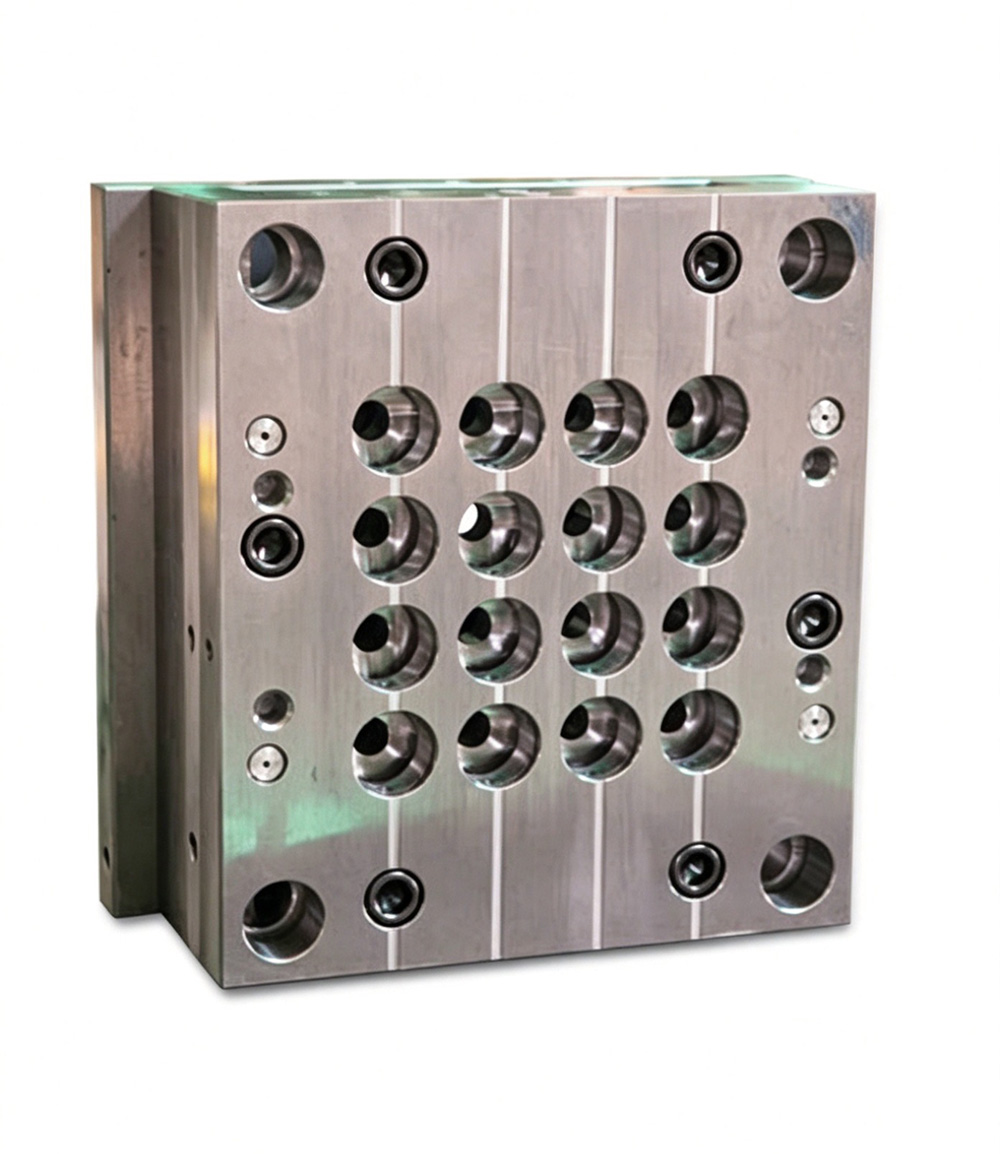
Selecting the right PET preform mold is one of the most critical decisions a bottle or preform manufacturer can make. The wrong choice leads to high reject rates, slow cycles, machine compatibility issues, and unexpected costs. The right choice delivers consistent quality, fast production, and excellent return on investment. This guide from Gutewei provides a cavity count guide and preform tool selection tips to help you make an informed decision.
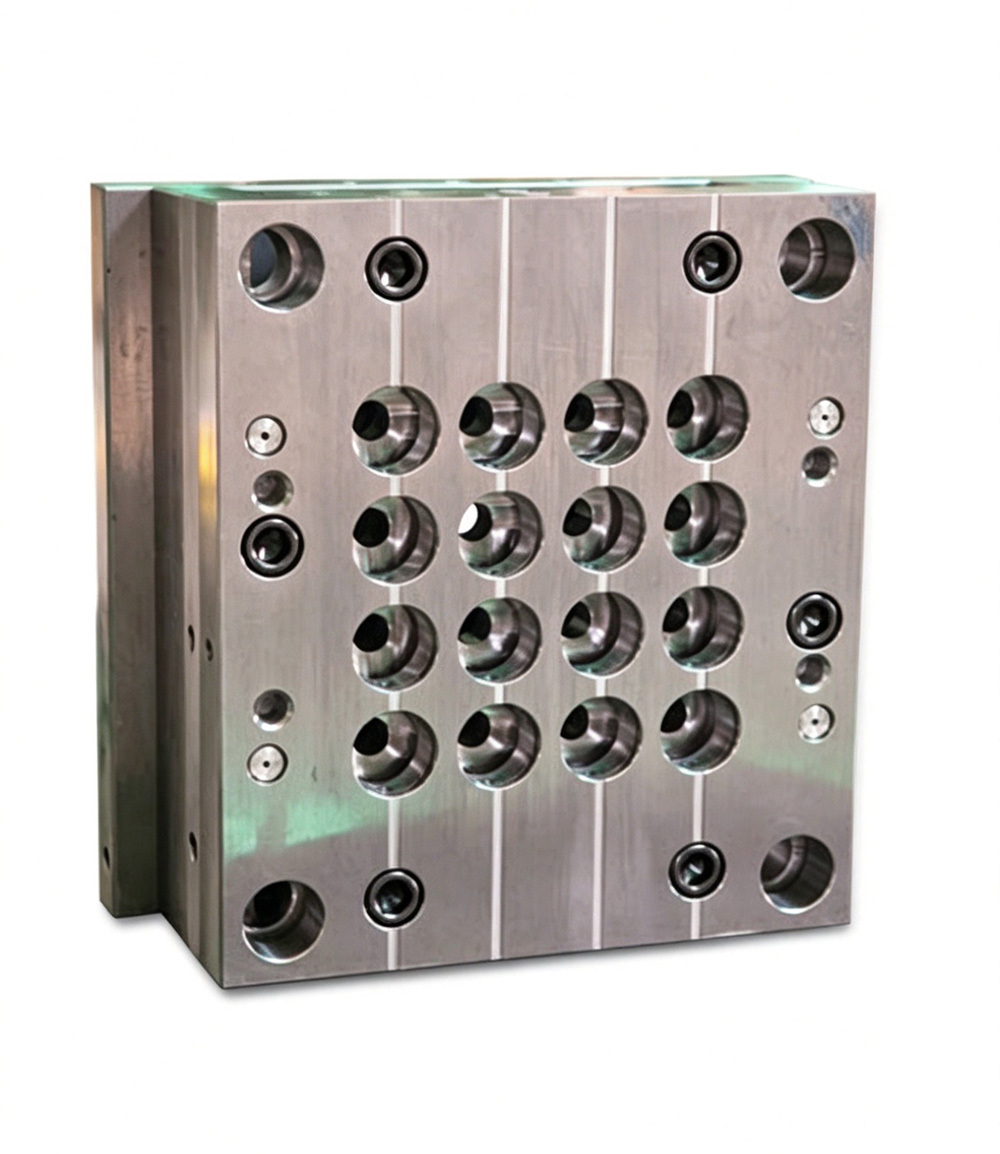
Step 1: Define Your Production Requirements
Before selecting a mold, clearly define what you need to produce:
| Question | Why It Matters |
|---|---|
| What bottle volume will you produce? | Determines preform weight and size |
| What neck finish do you need? | Determines neck ring design |
| What is your target annual output? | Determines cavity count |
| What injection machine do you have? | Determines mold interface and size |
| What material will you use? | Affects shrinkage and processing |
| Is it hot fill, CSD, or still water? | Determines design requirements |
Preform Weight by Bottle Volume (Reference Guide)
| Bottle Volume | Typical Preform Weight | Neck Finish Examples |
|---|---|---|
| 0.1L – 0.33L | 5g – 12g | PCO 1810, 26mm |
| 0.33L – 0.5L | 12g – 18g | PCO 1881 |
| 0.5L – 1.0L | 16g – 24g | PCO 1881, ALCO |
| 1.0L – 1.5L | 24g – 36g | PCO 1881, 38mm |
| 1.5L – 2.0L | 36g – 48g | PCO 1881, 38mm |
| 2.0L – 3.0L | 48g – 60g | 38mm, 48mm |
| 3.0L – 5.0L | 60g – 90g | 48mm, 55mm |
| 5.0L – 20L | 90g – 200g | 55mm, 63mm, custom |
Step 2: Choose the Right Cavity Count
The cavity count is one of the most important decisions. It directly affects:
Output per hour
Cost per preform
Machine size required
Initial investment
Maintenance complexity
Gutewei Cavity Count Guide
| Cavity Count | Best For | Annual Output (24/7) | Machine Tonnage |
|---|---|---|---|
| 1 – 8 cavities | R&D, pilot runs, large containers (>5L) | 1M – 15M | 100–400 tons |
| 16 – 32 cavities | Medium volume, specialty products | 30M – 100M | 300–500 tons |
| 48 cavities | High volume, regional producers | 130M – 170M | 400–600 tons |
| 72 cavities | High volume, standard beverage | 200M – 260M | 600–800 tons |
| 96 cavities | Industrial scale, water | 260M – 320M | 800–1,200 tons |
| 144 cavities | Ultra-high volume, small bottles | 350M – 450M | 1,200–1,800 tons |
How to Decide Cavity Count
| Factor | Consideration |
|---|---|
| Annual demand | Calculate your target preforms/year. Divide by machine uptime to find required hourly output. |
| Machine size | Your injection machine must have sufficient clamp tonnage and platen size for the cavity count. |
| Floor space | Larger molds require more machine space. |
| Investment budget | Higher cavity count means higher initial cost, but lower cost per preform. |
| Changeover frequency | If you change preform types often, lower cavity count may be more practical. |
Output Calculation Formula
Preforms per hour = (3600 seconds ÷ Cycle time in seconds) × Cavity count × Efficiency factor
Example – 72 cavities, 9-second cycle, 95% efficiency:
(3600 ÷ 9) × 72 × 0.95 = 400 × 72 × 0.95 = 27,360 preforms/hour
Annual (24/7): 27,360 × 8760 = 239.7 million preforms/year
Step 3: Select the Right Neck Finish
The neck finish must match your bottle cap and application:
| Neck Finish | Application | Gutewei Capability |
|---|---|---|
| PCO 1881 | Standard water, CSD (0.33L – 2L) | Standard and reinforced |
| ALCO | Beverage, juice | High precision |
| 38mm / 48mm | Edible oil, wide mouth | Heavy duty |
| 26mm / 28mm | Small bottles, personal care | Compact |
| 55mm / 63mm | Water cooler, bulk | Large diameter |
| Custom | Any special requirement | Designed to your cap |
Neck Finish Selection Tips
| Tip | Reason |
|---|---|
| Use standard finishes when possible | Lower cost, faster delivery |
| Choose reinforced for CSD | Prevents neck creep under pressure |
| Choose crystallized for hot fill (>70°C) | Prevents neck distortion |
| Verify capping compatibility | Test with your cap before manufacturing |
| Consider anti-counterfeit features | Embossing or unique geometry |
Step 4: Choose the Right Gate Type
| Gate Type | Best For | Advantages | Disadvantages |
|---|---|---|---|
| Open gate | Standard applications, cost-sensitive | Lower cost, simpler | Gate vestige remains |
| Valve gate | Premium finish, CSD, cosmetics | Zero gate vestige, no trimming | Higher cost, more maintenance |
Gate Selection Tips
| Tip | Reason |
|---|---|
| Choose valve gate for premium bottles | Clean neck finish, no trimming scrap |
| Choose valve gate for CSD | No stress concentration at gate |
| Open gate may be acceptable for oil/industrial | Gate vestige does not affect function |
| Consider valve gate for export | Higher quality perception |
Step 5: Consider Your Injection Machine
Your mold must fit your machine perfectly:
| Machine Factor | Gutewei Requirement |
|---|---|
| Machine brand and model | Interface design |
| Clamp tonnage | Must be sufficient for cavity count |
| Tie bar spacing | Mold must fit between tie bars |
| Ejector pattern | Must match machine ejectors |
| Hot runner control compatibility | Control system integration |
Machine Compatibility Checklist
| Check | Gutewei Action |
|---|---|
| Machine brand/model | Design custom interface |
| Clamp tonnage | Verify sufficient for cavity count |
| Platen dimensions | Confirm mold base fits |
| Ejector bolt pattern | Match exactly |
| Cooling water connections | Match machine fittings |
| Safety interlocks | Include in mold design |
Step 6: Evaluate Mold Material and Construction
| Component | Gutewei Material | Hardness | Benefit |
|---|---|---|---|
| Cores and cavities | S136 stainless steel | HRC 48–52 | Wear resistance, corrosion resistance |
| Neck rings | S136 + nitriding | HRC 55–58 (surface) | Long life, precise threads |
| Guide posts | Hardened tool steel | HRC 58 | Alignment, durability |
| Ejector pins | H13 | HRC 55–58 | Wear resistance |
Material Selection Tips
| Tip | Reason |
|---|---|
| Choose S136 for high clarity preforms | Best polishability |
| Choose 2316 for long life | Excellent wear resistance |
| Consider beryllium copper for fast cycles | High thermal conductivity |
| Verify corrosion resistance | Cooling water can cause pitting |
Step 7: Review Quality Assurance
| QA Test | Gutewei Standard | Why It Matters |
|---|---|---|
| Cavity balance test | ≤ 0.30% weight variation | Consistent preforms |
| CMM inspection | ±0.02mm on neck finish | Perfect capping |
| Short-shot test | Uniform fill | No short shots |
| 24-hour run test | Stable production | Reliable operation |
| Material certification | Hardness verified | Long mold life |
Quality Checklist for Buyers
| Check | Ask Your Supplier |
|---|---|
| Balance certificate | Will you provide weight data for each cavity? |
| CMM report | Will you measure and report neck finish dimensions? |
| Video verification | Can I see the mold running before shipping? |
| Material certificates | Can you provide hardness and material composition reports? |
Step 8: Consider After-Sales Support
| Support Service | Gutewei Offering |
|---|---|
| Spare parts availability | Standardized components, 24-hour processing |
| Technical support | Email, video call, on-site |
| Installation guidance | Manual, video, or on-site |
| Training | Available at Gutewei or customer site |
| Mold refurbishment | Quoted per scope |
Gutewei Preform Tool Selection Tips: Summary Checklist
| Selection Factor | Gutewei Recommendation |
|---|---|
| Cavity count | Match to annual demand and machine size |
| Neck finish | Choose standard when possible, custom when needed |
| Gate type | Valve gate for premium/CSD, open gate for cost-sensitive |
| Machine compatibility | Confirm before manufacturing |
| Materials | S136 for clarity, 2316 for durability |
| Quality testing | Require balance certificate and CMM report |
| After-sales support | Confirm spare parts and support availability |
Common Mistakes to Avoid
| Mistake | Why It Is a Mistake | Gutewei Solution |
|---|---|---|
| Choosing too many cavities | Machine may not have enough clamp tonnage | Verify machine capability first |
| Choosing standard neck finish | May not fit your cap | Test cap compatibility |
| Neglecting machine interface | Mold may not fit | Provide machine details early |
| Not testing before shipping | Risk of quality issues | Pre-shipment testing included |
| Ignoring after-sales support | Difficult to get spare parts | Standardized components |
Ready to Choose Your Preform Mold?
Selecting the right PET preform mold does not have to be complicated. Use this cavity count guide and preform tool selection tips to define your requirements — then let Gutewei provide the optimal solution.
Contact Gutewei today with your answers to the questions above. We will provide a mold recommendation tailored to your production needs — from cavity count to neck finish to machine compatibility.