
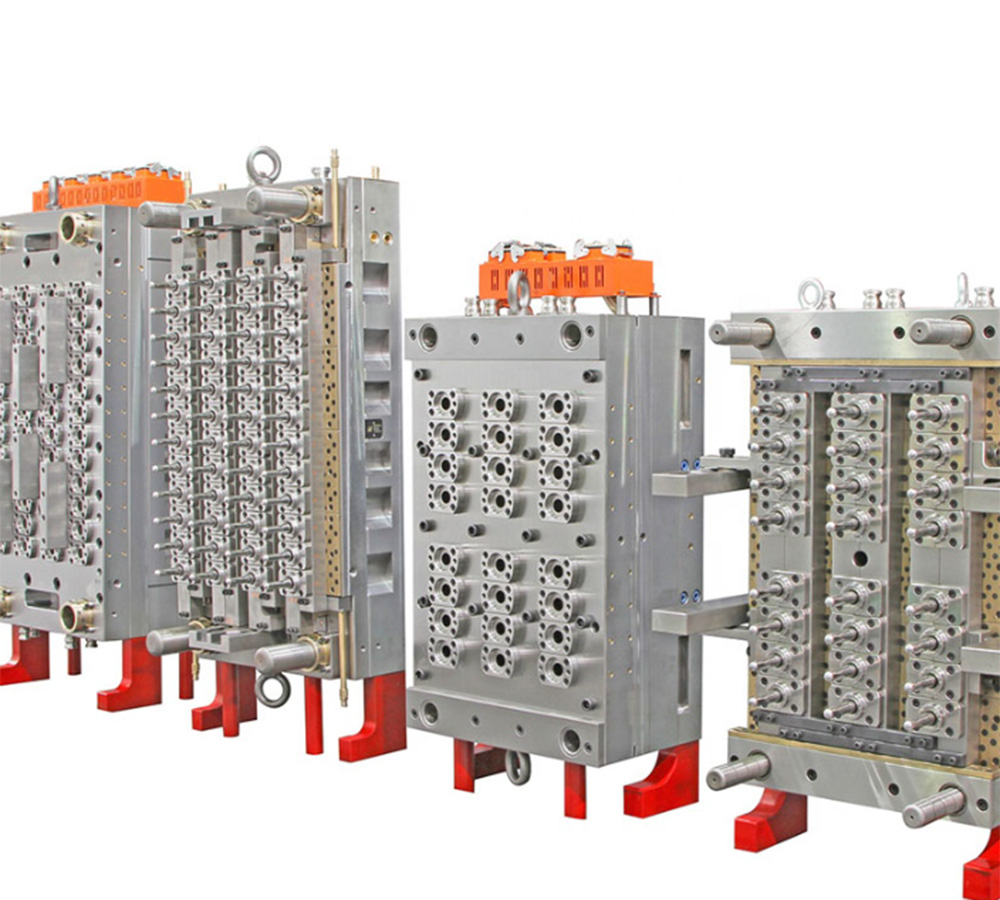
In PET bottle manufacturing, energy costs are the second largest expense after raw materials. Compressed air — used to blow and stretch each bottle — can account for 40–60% of total electrical consumption on a blow molding line. Every reduction in air usage directly improves your bottom line. That is why Gutewei engineers low energy blow molds featuring optimized air flow design — delivering cost effective PET bottle molds that save money with every cycle.
The Hidden Cost of Compressed Air
Compressed air is expensive. Producing 1 cubic meter of compressed air at 8 bar typically requires 0.1–0.15 kWh of electricity. For a high volume bottling line:
| Production Volume | Annual Air Consumption | Annual Electricity Cost (Air Only) |
|---|---|---|
| 10 million bottles | 200,000 – 300,000 m³ | 22,000 |
| 50 million bottles | 1,000,000 – 1,500,000 m³ | 110,000 |
| 100 million bottles | 2,000,000 – 3,000,000 m³ | 220,000 |
A low energy blow mold that reduces air consumption by 15–20% can save tens of thousands of dollars annually — while also reducing compressor wear and maintenance.
Where Does Air Go in Blow Molding?
In a typical blow molding cycle, compressed air is used for:
| Air Use | Percentage | Gutewei Optimization |
|---|---|---|
| Pre-blow (low pressure stretch) | 10–15% | Optimized timing and pressure |
| High pressure blow (bottle formation) | 60–70% | Reduced volume, faster valve response |
| Hold pressure (cooling phase) | 15–20% | Minimal required, precisely timed |
| Venting (exhaust after cycle) | 5% | Quick exhaust, no residual pressure |
Gutewei optimized air flow design addresses each phase to minimize total consumption.
Gutewei Optimized Air Flow Design: Technical Features
1. Precision Blow Port Sizing
Oversized blow ports waste air. Gutewei calculates the exact port diameter for each bottle size and wall thickness using computational fluid dynamics (CFD).
| Bottle Size | Conventional Port Diameter | Gutewei Optimized Port | Air Savings |
|---|---|---|---|
| 0.5L water | 6mm | 4.5mm | 25% |
| 1.5L water | 8mm | 6mm | 22% |
| 2L CSD | 10mm | 7.5mm | 20% |
2. Fast Response Valve Integration
Slow valves waste air by allowing unnecessary flow during valve opening and closing. Gutewei molds are compatible with high speed pneumatic valves (response time < 15ms), reducing air consumption by an additional 8–12% compared to standard valves.
3. Optimized Pre-Blow Pressure
High pre-blow pressure stretches the preform prematurely, wasting air and potentially causing uneven wall distribution. Gutewei provides recommended pre-blow pressure curves based on:
Bottle volume
Preform weight
PET intrinsic viscosity (IV)
Typical pre-blow pressure reduction: 2–3 bar lower than generic settings.
4. Minimized Dead Volume
Air trapped in the blow mold passages between the valve and the bottle cavity is air that pressurizes but never reaches the bottle. Gutewei designs:
Shortest possible air passages
Smooth bore internal geometry
Reduced fitting connections
Result: 5–8% less air per cycle from reduced dead volume.
5. Quick Exhaust System
Holding pressure after bottle formation is often maintained longer than necessary. Gutewei molds feature precision-timed exhaust that opens as soon as the bottle is dimensionally stable, preventing overcooling and venting residual pressure earlier — saving 3–5% of cycle air.
Low Energy Blow Mold: Performance Data
| Parameter | Conventional Blow Mold | Gutewei Low Energy Blow Mold | Savings |
|---|---|---|---|
| Air consumption per bottle (0.5L) | 18 liters | 14.5 liters | 19.4% |
| Air consumption per bottle (1.5L) | 35 liters | 28 liters | 20.0% |
| Pre-blow pressure | 8 bar | 5.5 bar | 31% reduction |
| High pressure blow time | 0.8 seconds | 0.65 seconds | 19% reduction |
| Valve response time | 30ms | 12ms (with compatible valve) | 60% faster |
| Annual air cost (50M bottles) | $80,000 | $64,000 | $16,000 saved |
Cost Effective PET Bottle Mold: Beyond Air Savings
While air optimization is a key feature, Gutewei cost effective PET bottle molds deliver value through multiple channels:
1. Lower Energy Consumption (Air + Chiller)
Reduced air use = lower compressor load
Optimized cooling = lower chiller electricity
Combined energy savings: 12–18% per bottle
2. Faster Cycle Times
Optimized air flow contributes to faster cycles. Faster cycles = more bottles per hour = lower fixed cost per bottle.
3. Reduced Compressor Wear
Lower air consumption means compressors run less frequently or at lower load, extending compressor life by 20–30% and reducing maintenance costs.
4. Lower Reject Rates
Consistent air delivery and optimized pressure curves produce more uniform bottles, reducing scrap and material waste.
Comparison: Gutewei Low Energy Mold vs. Standard Mold
| Factor | Standard Blow Mold | Gutewei Low Energy Blow Mold |
|---|---|---|
| Air consumption (baseline) | 100% | 80–85% |
| Pre-blow pressure | Fixed, often high | Optimized, 2–4 bar lower |
| Blow port sizing | Standard diameter | CFD-optimized per bottle |
| Dead volume | As-machined | Minimized design |
| Annual energy cost (air only) | $100,000 | 85,000 |
| Payback period on mold investment | — | Typically 6–12 months |
Applications Best Suited for Gutewei Low Energy Blow Molds
| Application | Why Low Energy? | Expected Air Savings |
|---|---|---|
| High volume water bottling | Millions of bottles, air cost adds up | 18–22% |
| CSD production | Higher blow pressures, more savings potential | 15–20% |
| Contract packing | Multiple bottle sizes, quick ROI | 15–18% |
| Remote / off-grid facilities | High electricity cost, critical savings | 20–25% |
| Large bottle (3L–20L) | More air per bottle, larger absolute savings | 15–20% |
Why Global Bottlers Choose Gutewei for Cost Effective Molds
| Buyer Need | Gutewei Solution |
|---|---|
| Reduce electricity bills | Optimized air flow design, 15–20% air savings |
| Lower carbon footprint | Less compressed air = less CO₂ |
| Quick return on investment | 6–12 month payback typical |
| Maintain bottle quality | Consistent air delivery, uniform expansion |
| Compatible with existing machine | Works with standard blow molding equipment |
Case Example: 8-Cavity Water Bottle Line
| Before (Generic Mold) | After (Gutewei Low Energy Mold) |
|---|---|
| Bottle size: 0.5L water | Same bottle |
| Cavities: 8 | Same 8 cavities |
| Air per bottle: 19 liters | Air per bottle: 14.8 liters |
| Annual production: 60M bottles | Same 60M bottles |
| Annual air volume: 1,140,000 m³ | Annual air volume: 888,000 m³ |
| Annual air cost (@125,400 | Annual air cost: $97,680 |
| Annual savings: — | $27,720 |
| Gutewei mold premium payback: | 7 months |
Installation Tips for Maximum Energy Savings
To achieve full energy savings from your Gutewei low energy blow mold:
Use high speed valves – Standard valves negate our optimized design
Verify air pressure settings – Follow Gutewei recommended curves
Check for leaks – Even small leaks waste significant energy
Monitor air consumption – Track m³ per 1,000 bottles to verify savings
Train operators – Understanding the system improves results
Ready to Cut Your Energy Bills?
If you are tired of high electricity costs eating into your margins, it is time to switch to a low energy blow mold from Gutewei. Our optimized air flow design delivers cost effective PET bottle molds that pay for themselves through energy savings alone — typically within one year.
Contact Gutewei today with your bottle size, current air consumption (if known), and annual production volume. We will calculate your potential savings and provide a mold solution that reduces your energy bill.