
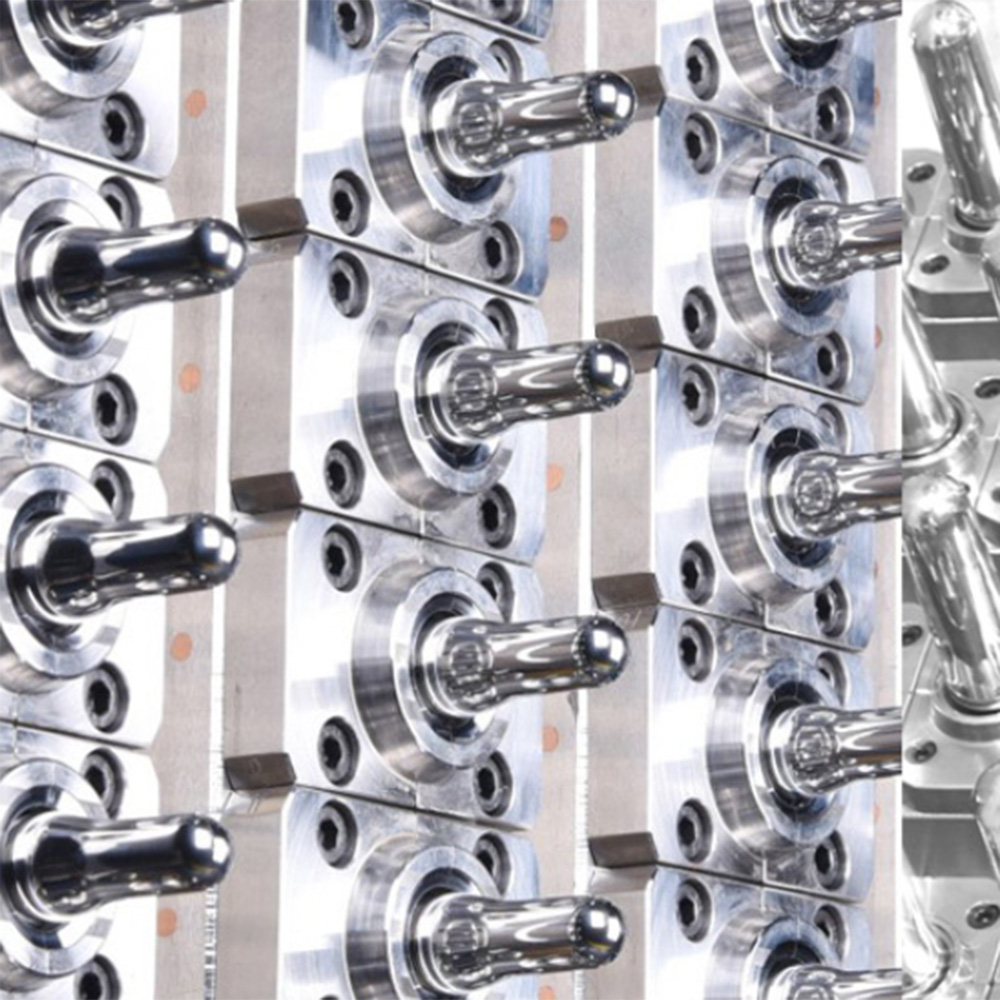
Hot filling is one of the most demanding applications in PET bottle manufacturing. Juices, teas, isotonic drinks, and某些 sauces are filled at temperatures between 85°C and 95°C — far above the typical 65°C heat deflection temperature of standard PET. Without a properly designed mold, the bottle will shrink, distort, or collapse on the filling line. That is why Gutewei specializes in hot fill blow molds: heat resistant PET bottle tools engineered specifically for high temperature applications.
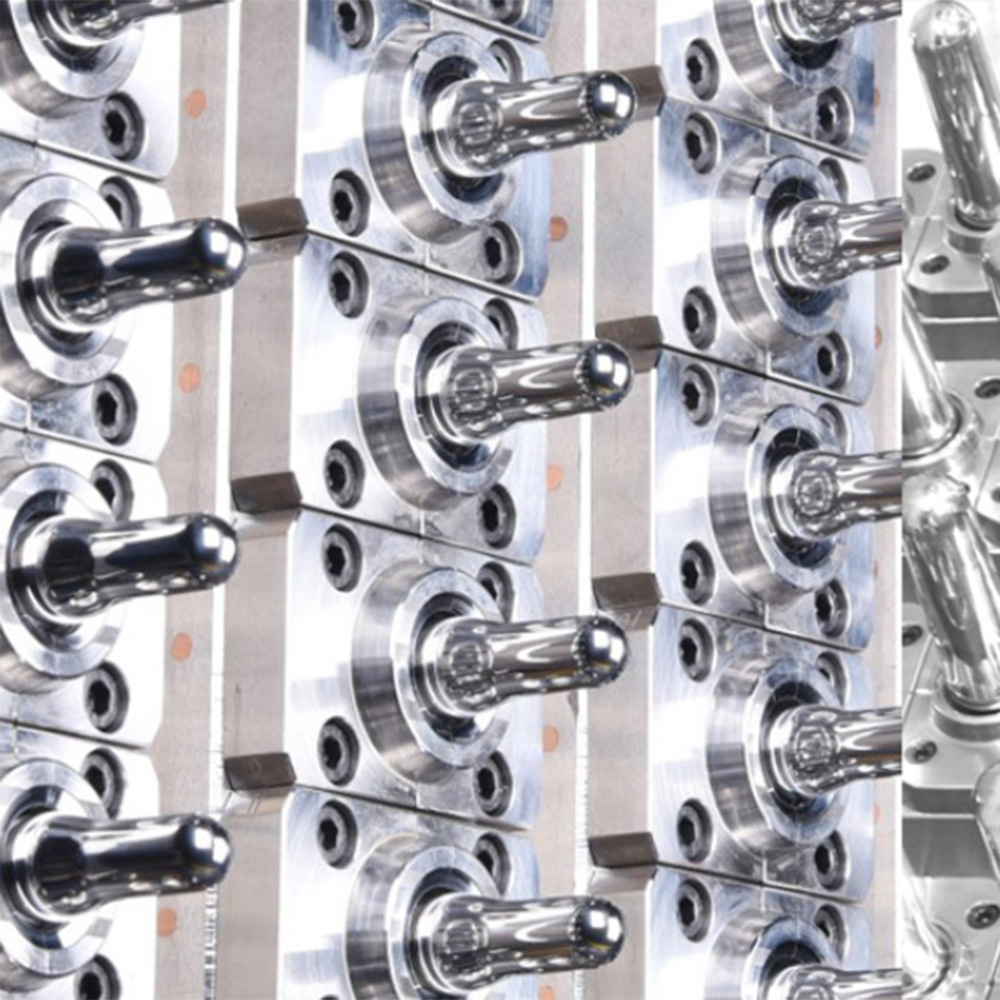
What Makes Hot Fill Different from Standard Blow Molding?
| Parameter | Standard Blow Molding | Hot Fill Blow Molding |
|---|---|---|
| Fill temperature | Ambient (20–30°C) | 85–95°C |
| Bottle requirement | Standard PET | Heat-set PET (crystallized) |
| Mold feature | Standard cooling | Heat-set cavity + controlled cooling |
| Neck requirement | Standard finish | Crystallized neck ring |
| Bottle characteristic | Flexible | Rigid, heat stable |
Standard blow molds cannot produce bottles that survive hot filling. Gutewei hot fill blow molds are specifically designed for the heat-set process.
The Heat-Set Process: How Hot Fill Bottles Are Made
Heat setting is a proprietary process that increases PET crystallinity in the bottle wall, creating thermal stability. The Gutewei high temperature application mold supports this process through:
1. High Cavity Temperature
Unlike standard molds chilled to 8–12°C, hot fill molds operate at 120–140°C during the heat-set cycle. The mold holds the blown bottle against the hot cavity wall for a programmed dwell time, crystallizing the PET.
2. Controlled Cooling Phase
After heat setting, the mold cavity temperature is reduced to allow the bottle to cool to a stable temperature before ejection. Gutewei molds feature dual-zone cooling circuits:
Heat zone – maintains crystallization temperature
Cool zone – controlled reduction for dimensional stability
3. Crystallized Neck Ring
The bottle neck is the most critical area. An amorphous (non-crystallized) neck will deform under hot fill conditions. Gutewei hot fill molds include:
Heated neck rings for crystallized neck finish
Precise temperature control (±3°C)
Neck crystallinity target: 35–45%
Gutewei Heat Resistant PET Bottle Tool: Technical Features
| Feature | Gutewei Implementation | Benefit |
|---|---|---|
| Cavity material | High hardness stainless steel (S136, HRC 50–52) | Withstands repeated thermal cycles |
| Heating system | Cartridge heaters or oil circulation | Uniform cavity temperature |
| Insulation layer | Thermal barrier between cavity and mold base | Protects machine platens, reduces energy loss |
| Cooling channels | Two independent circuits (hot/cool) | Precise thermal profile control |
| Neck ring heating | Independent heated neck blocks | Consistent neck crystallinity |
| Venting | High temperature rated venting | Prevents flash at elevated temperatures |
Performance Capabilities of Gutewei Hot Fill Blow Molds
| Parameter | Gutewei Standard |
|---|---|
| Maximum fill temperature | Up to 95°C |
| Bottle volume range | 0.2L – 2.5L |
| Typical crystallinity (body) | 30–40% |
| Typical crystallinity (neck) | 35–45% |
| Bottle shrinkage (after filling) | < 1.5% |
| Maximum hot fill output | Up to 10,000 bottles/hour (4-cavity) |
| Mold life in hot fill service | 8–12 million cycles |
Applications for Gutewei Hot Fill Blow Molds
| Product Category | Typical Temperature | Bottle Size | Gutewei Mold Feature |
|---|---|---|---|
| Fruit juice (not from concentrate) | 88–92°C | 0.2L – 1.5L | High clarity, panel design |
| Tea drinks | 85–90°C | 0.3L – 1.5L | Vacuum panel compensation |
| Sports drinks | 85–88°C | 0.5L – 1L | Balanced wall thickness |
| Isotonic beverages | 85–90°C | 0.5L – 1L | Heat-set body with flexible panels |
| Tomato sauce / puree | 90–95°C | 0.5L – 1L | Heavy wall, reinforced base |
Hot Fill Bottle Design Considerations
Hot fill bottles require special design features that Gutewei molds accommodate:
Vacuum Panels
As hot liquid cools, it contracts, creating negative pressure inside the bottle. Without compensation, the bottle collapses. Gutewei molds produce bottles with engineered vacuum panels that flex inward, absorbing the pressure change.
Reinforced Base
The bottle base must resist dimpling under vacuum. Gutewei hot fill molds feature champagne-style or petaloid bases with thickened sections.
Neck Crystallization
The amorphous PET neck softens at hot fill temperatures. Gutewei molds include heated neck rings that crystallize the neck during the blow cycle, raising its heat deflection temperature to over 120°C.
Why Choose Gutewei for High Temperature Application Molds?
| Buyer Concern | Gutewei Solution |
|---|---|
| Bottles collapse during hot fill | Heat-set cavity + crystallized neck |
| Neck distortion after capping | Independent heated neck ring |
| Long cycle times | Optimized heating/cooling profile |
| High mold cost | Durable S136 steel, 8–12M cycle life |
| Inconsistent bottle dimensions | Precise thermal control ±3°C |
| Machine compatibility | Fits Sidel, Krones, Sipa, Aoki, Nissei |
Comparison: Gutewei Hot Fill Mold vs. Standard Mold
| Parameter | Standard Blow Mold | Gutewei Hot Fill Blow Mold |
|---|---|---|
| Cavity temperature (during blow) | 8–12°C | 120–140°C (heat-set phase) |
| Neck crystallinity | 0–5% | 35–45% |
| Maximum fill temperature | 65°C | 95°C |
| Bottle shrinkage after fill | 3–5% | < 1.5% |
| Suitable for hot fill? | No | Yes |
| Cycle time | 3–4 seconds | 6–10 seconds (heat-set required) |
Maintenance Tips for Hot Fill Blow Molds
To maintain performance of your Gutewei heat resistant PET bottle tool:
Monitor heating elements – Replace cartridge heaters showing resistance drift
Check insulation – Damaged insulation increases energy cost and risks machine damage
Inspect neck rings – Crystallized areas should show uniform appearance
Clean vents regularly – High temperature operation accelerates residue buildup
Follow warm-up procedure – Never start production on a cold hot-fill mold
Ready for a Hot Fill Mold That Delivers?
If you produce juices, teas, or any beverage filled above 70°C, you need a dedicated hot fill blow mold — not a standard mold pushed beyond its limits. Gutewei heat resistant PET bottle tools are engineered for the unique demands of high temperature applications.
Contact Gutewei today with your hot fill bottle specifications. Tell us your target fill temperature and bottle volume. We will design a hot fill blow mold that produces stable, distortion-free bottles — bottle after bottle, at temperature.