
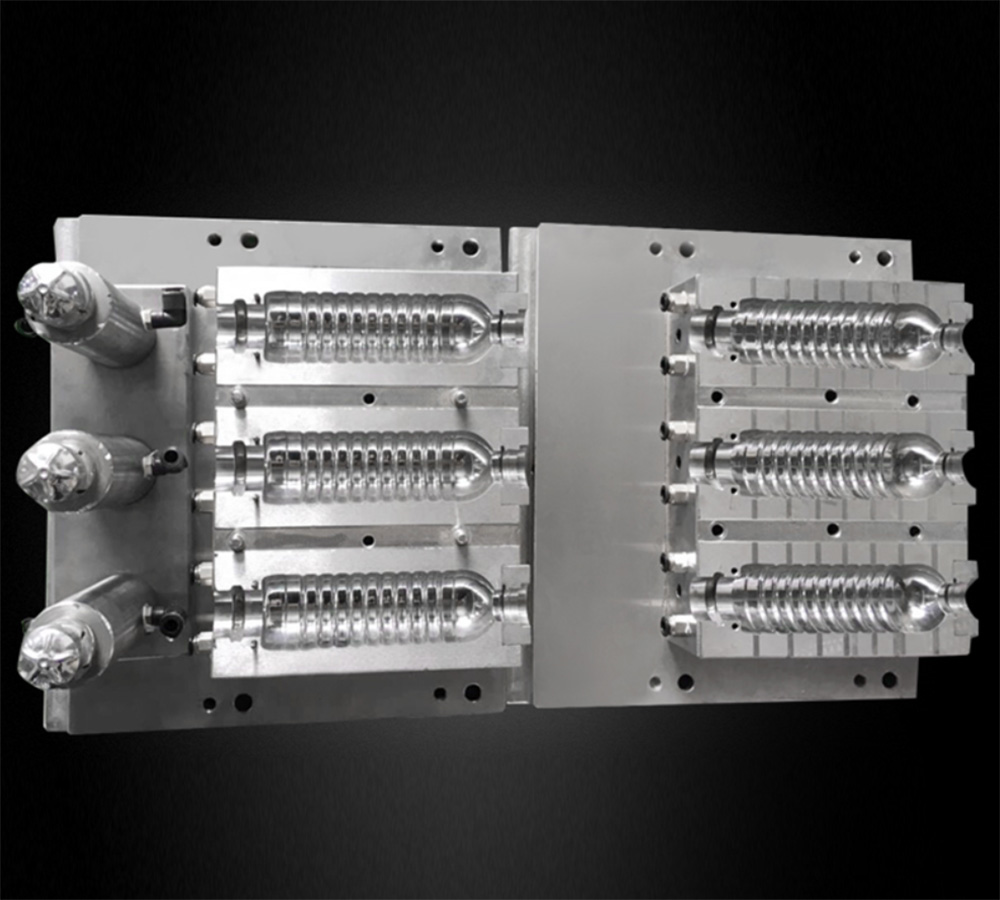
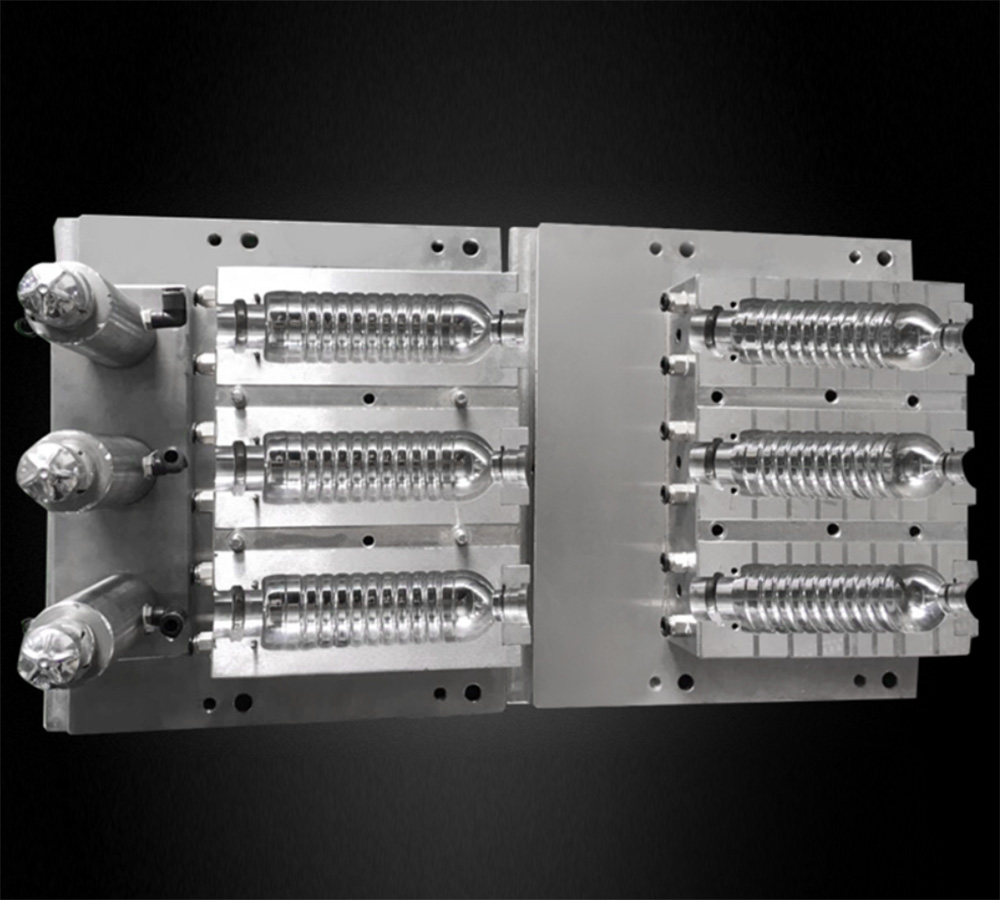
In PET bottle manufacturing, mold durability is not a luxury — it is a profitability driver. Every time a blow mold wears out or requires unscheduled maintenance, production stops. Cavities go offline. Delivery commitments slip. That is why Gutewei builds every mold as a durable blow mold for PET bottle applications, using hardened stainless steel tooling to deliver a truly long service life mold.
What Kills Ordinary Blow Molds?
Most blow molds fail prematurely for four reasons:
| Failure Cause | Result |
|---|---|
| Soft cavity material | Surface scratches, bottle clarity loss |
| Poor wear plate design | Uneven mold opening, pin binding |
| Inadequate corrosion resistance | Pitting from cooling water exposure |
| Neck ring fatigue | Cracking, neck finish distortion |
Gutewei engineers solutions for every one of these failure modes — before they happen.
Gutewei Hardened Stainless Steel Tooling: Material Matters
Not all stainless steel is the same. Gutewei selects only premium grades specifically chosen for PET blow molding conditions:
| Material Grade | Hardness (HRC) | Key Property | Gutewei Application |
|---|---|---|---|
| S136 (ESR) | 48–52 | High polishability, corrosion resistant | Cavity body, neck ring |
| 2316 (DIN 1.2316) | 45–50 | Excellent wear resistance | Cavity plates, guide posts |
| H13 | 50–54 | High impact strength | Core rods, stretch rod guides |
| Bronze alloy | 85–90 HB | Anti-galling, self-lubricating | Bushings, wear plates |
Why Hardened Stainless Steel?
Standard blow molds often use pre-hardened steel (HRC 30–35). Gutewei hardened stainless steel tooling starts at HRC 45 and reaches HRC 54 after heat treatment. The difference:
5x longer cavity life before surface degradation
No bottle clarity loss after millions of cycles
Corrosion resistance to cooling water chemistry variations
Lower total cost per bottle over mold lifetime
Long Service Life Mold: Engineered for Millions of Cycles
A long service life mold is not just about hard steel. Gutewei integrates durability into every component:
1. Replaceable Wear Plates
High-friction areas (mold opening/closing surfaces) use hardened, replaceable wear plates. When they eventually show signs of wear, you replace only the plate — not the entire mold half.
2. Guided Ejection System
Uneven ejection bends pins and damages cavities. Gutewei uses shoulder-guided ejector pins with hardened bushings, ensuring straight, friction-free motion for over 10 million cycles.
3. Reinforced Neck Ring Assembly
The neck ring experiences the highest stress during blow pin insertion and mold opening. Gutewei neck rings are:
Made from S136 hardened to HRC 50
Supported by beefed-up clamp blocks
Dowel-pinned for exact relocation after disassembly
4. Corrosion-Protected Cooling Channels
Cooling water eventually attacks unprotected steel. Gutewei applies nickel-based anti-corrosion coating to all cooling channel surfaces — a small detail that prevents pitting and channel blockage over years of operation.
Real-World Durability: Gutewei Molds in Production
| Operating Condition | Conventional Mold Life | Gutewei Hardened Mold Life |
|---|---|---|
| 24/7 water bottle production | 8–12 million cycles | 20–25 million cycles |
| Carbonated drink (higher stress) | 5–8 million cycles | 15–20 million cycles |
| Hot fill application | 3–5 million cycles | 10–15 million cycles |
| Edible oil (thick wall) | 6–10 million cycles | 18–22 million cycles |
After 15 million cycles, a Gutewei mold typically requires only:
New wear plates (low cost)
Fresh O-rings and seals
Optional cavity repolish
The core cavity and neck ring remain in specification.
Why Global Buyers Choose Gutewei for Durable Blow Molds
| Buyer Concern | Gutewei Solution |
|---|---|
| Mold wears out too fast | Hardened stainless steel HRC 48–54 |
| Spare parts availability | Standardized inserts, 24-hour spare parts service |
| Remote location, hard to replace mold | 20+ million cycle design life |
| Different bottle materials | Compatible with PET, rPET, bio-PET |
| Return on investment | Lower cost per thousand bottles over 5+ years |
Applications for Gutewei Durable Blow Molds
High-volume water bottlers – 24/7 operation, maximum uptime requirement
CSD producers – Pressure applications with higher mold stress
Export bottle manufacturers – Remote locations with limited local mold repair
Contract packers – Multiple bottle changes, high cumulative cycles
Oil and chemical bottles – Corrosive environments, thick wall demands
Maintenance Tips for Maximum Mold Life
To achieve the full long service life of your Gutewei mold:
Use filtered cooling water – Prevents channel scaling and pitting
Lubricate wear plates weekly – Reduces friction and galling
Inspect neck rings monthly – Check for cracks or deformation
Store molds properly – Clean, dry, and coated when not in use
Follow our recommended process parameters – Avoid over-clamping or overheating
Ready for a Blow Mold That Lasts?
If you are tired of replacing blow molds every 12–18 months, it is time to invest in a durable blow mold for PET bottle from Gutewei. Our hardened stainless steel tooling delivers long service life mold performance that lowers your cost per bottle and keeps your production line running.
Contact Gutewei today for a quote on a durable blow mold designed for your bottle and your production schedule.