
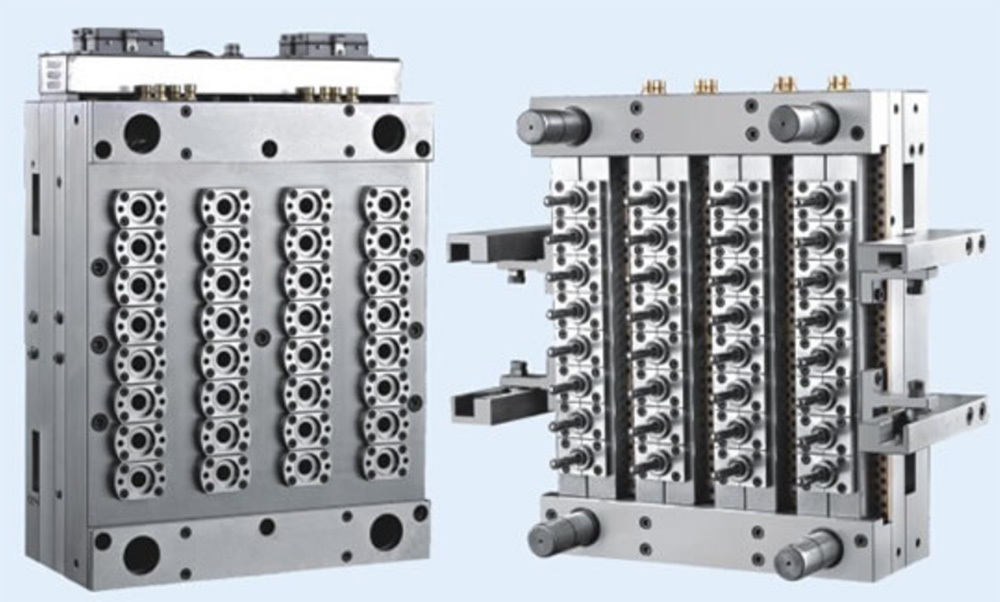
In PET bottle manufacturing, wall thickness uniformity is not just a quality indicator. It is the defining factor that determines bottle strength, weight reduction potential, and material cost efficiency.
When a preform has uniform wall thickness, the blow molding process stretches material evenly, creating a bottle with consistent strength, optimal clarity, and reliable performance. When wall thickness varies, the results are predictable: weak spots, uneven material distribution, increased rejection rates, and compromised bottle integrity.
At Gutewei, we have discovered that the secret to wall thickness uniformity lies in one critical component: the precision core design. This article reveals how our advanced core technology produces preforms with exceptional wall thickness consistency, helping customers achieve superior bottle quality and material efficiency.
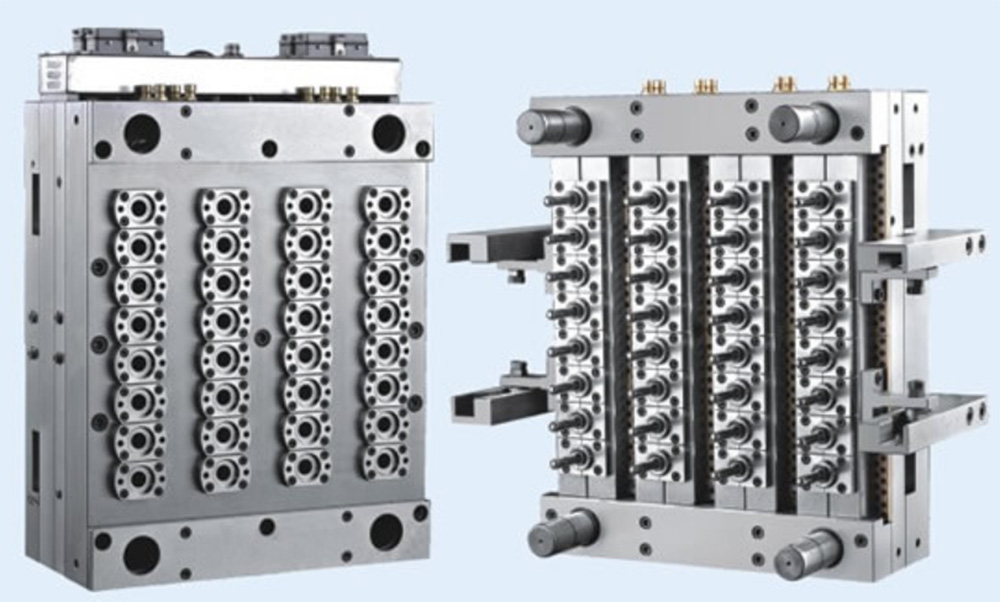
Why Wall Thickness Uniformity Matters
Before examining the technology, it is essential to understand why wall thickness uniformity is so critical.
The Impact on Blow Molding
During the blow molding process, the preform is heated and stretched inside a bottle mold. The PET material flows in a predictable pattern, with axial stretch providing vertical elongation and radial expansion providing horizontal expansion.
If the preform has uneven wall thickness, thicker sections stretch less, creating heavy areas in the final bottle. Thinner sections over-stretch, creating weak points prone to failure. The base, where the gate is located, may have inconsistent material distribution affecting bottle stability. The neck finish, which remains unchanged, must maintain precise dimensions for sealing.
The result is a bottle that may fail drop tests, burst pressure tests, or exhibit poor aesthetic quality.
The Impact on Material Efficiency
Wall thickness uniformity directly affects material usage. When wall thickness varies, manufacturers must increase overall preform weight to ensure that the thinnest sections meet minimum strength requirements. This adds material cost without adding value.
With perfect wall thickness uniformity, manufacturers can reduce preform weight while maintaining strength, achieving material savings of 5 to 10 percent or more.
The Impact on Production Efficiency
Poor wall thickness uniformity increases rejection rates, wasting material and reducing output. It also requires more frequent quality checks and process adjustments, reducing overall equipment efficiency.
The Core: The Heart of Wall Thickness Uniformity
The preform core is the component that forms the inside surface of the preform. Together with the cavity, which forms the outside surface, the core determines the wall thickness of the finished preform.
Why the Core Is Critical
The core directly controls the inside diameter of the preform at every point along its length. Any variation in core geometry creates corresponding variation in wall thickness. The core also affects cooling, as heat must be extracted through both the cavity and the core. Core design influences material flow during injection, affecting how PET fills the gap between core and cavity.
In short, you cannot achieve wall thickness uniformity without a precision-engineered core.
Gutewei's Precision Core Design Technology
Gutewei has developed a comprehensive approach to core design and manufacturing that delivers exceptional wall thickness uniformity.
Technology 1: Precision Core Machining
The foundation of wall thickness uniformity is core geometry. Gutewei's cores are manufactured with exceptional precision.
High-Speed CNC Machining
Gutewei uses 5-axis CNC machining centers to produce cores with positioning accuracy of plus or minus 0.005 millimeters. Surface finishes achieve Ra 0.2 to 0.4 micrometers on core surfaces, reducing friction and improving material flow. Core roundness is maintained within 0.005 millimeters, ensuring consistent wall thickness around the entire circumference.
Single-Setup Manufacturing
All critical core surfaces are machined in a single setup to eliminate variation that can occur when repositioning the workpiece between operations. This ensures perfect geometric relationships between all core features.
CMM Verification
Every core is verified using coordinate measuring machines with full dimensional inspection against CAD models. Statistical analysis of measurement data ensures that every core meets specifications before assembly.
Technology 2: Optimized Core Cooling
Cooling is critical for wall thickness uniformity. Uneven cooling creates temperature variations that cause differential shrinkage, leading to wall thickness variation.
Conformal Cooling in Cores
Traditional core cooling uses straight-drilled channels that run along the core axis. While effective for basic cooling, these channels cannot follow the complex geometry of the preform.
Gutewei's cores feature conformal cooling channels that follow the exact contour of the preform shape. This allows heat to be extracted uniformly from all areas of the preform wall, including the thick gate area and the thin neck region.
CFD-Optimized Core Cooling
Gutewei uses computational fluid dynamics to model coolant flow, temperature distribution, and heat transfer within the core. This identifies and eliminates hot spots that could cause wall thickness variation before the core is manufactured.
Zone-Specific Core Cooling
Different areas of the preform have different cooling requirements. The gate area requires aggressive cooling to prevent crystallization. The body requires uniform cooling for consistent wall thickness. The neck requires controlled cooling to maintain crystallized finish properties.
Gutewei cores feature independent cooling circuits for different zones, allowing precise temperature control tailored to each area.
Technology 3: Core Surface Technology
The surface of the core affects both material flow and preform release. Gutewei's core surface technology delivers both.
High-Polish Finishes
Core surfaces are polished to mirror finishes of Ra 0.1 micrometers or better. This reduces friction as PET flows around the core, promoting uniform material distribution.
Release Coatings
Optional release coatings reduce adhesion between the preform and the core, ensuring clean, consistent ejection without distortion that could affect wall thickness.
Technology 4: Core and Cavity Alignment
Perfect wall thickness uniformity requires perfect alignment between core and cavity. Even a slight misalignment creates uneven wall thickness.
Precision Alignment Systems
Gutewei molds feature precision alignment systems that maintain core-to-cavity positioning within 0.01 millimeters. Heavy-duty guide pins and bushings with wear-resistant coatings maintain alignment over millions of cycles.
Core Retention Systems
Core retention systems hold each core in precise position within the mold, preventing movement during the high-pressure injection process.
Technology 5: Core Interchangeability
Gutewei cores are manufactured to such precise tolerances that they are fully interchangeable. Any core fits in any cavity position without affecting wall thickness uniformity.
This interchangeability offers significant benefits. Damaged cores can be replaced without special fitting. Preform designs can be changed by replacing cores while keeping cavities. Spare parts inventory is simplified with standardized components.
The Manufacturing Process: From Design to Perfect Core
Gutewei's core manufacturing process ensures exceptional quality at every step.
Step 1: Design and Simulation
Every core begins with detailed 3D modeling and thermal simulation to optimize cooling performance. Mold flow analysis verifies that the core design will promote uniform material distribution.
Step 2: Material Selection
Cores are manufactured from premium materials selected for thermal conductivity, wear resistance, and dimensional stability. Options include high-grade tool steel, stainless steel, and beryllium copper for critical cooling areas.
Step 3: Precision Machining
High-speed CNC machining produces core geometry with micron-level accuracy. All critical surfaces are machined in a single setup.
Step 4: Surface Finishing
Core surfaces are polished to mirror finishes. Optional coatings are applied as specified.
Step 5: Quality Inspection
Every core undergoes CMM verification of all dimensions. Surface finish is measured to verify specifications. Cooling circuits are flow-tested to ensure adequate heat transfer.
Step 6: Assembly and Testing
Cores are assembled into the mold and alignment is verified. Trial runs confirm wall thickness uniformity across all cavities.
Measuring Wall Thickness Uniformity
Gutewei uses advanced measurement techniques to verify wall thickness uniformity.
Preform Wall Thickness Measurement
Preform wall thickness is measured at multiple points along the preform length using precision measurement equipment. Key measurement points include the gate area, lower body, mid-body, upper body, and neck transition.
Uniformity Metrics
Gutewei tracks several key metrics for wall thickness uniformity. Maximum wall thickness variation across all measurement points is maintained within 0.05 millimeters. Cavity-to-cavity wall thickness variation is maintained within 0.03 millimeters. Concentricity, which measures how centered the core is within the cavity, is maintained within 0.02 millimeters.
Blow Mold Testing
The ultimate test of wall thickness uniformity is blow molding performance. Gutewei conducts blow mold testing on sample preforms to verify that uniform wall thickness translates to consistent bottle quality.
Real-World Results: What Gutewei Customers Experience
Customer Case: Major Water Bottler
A major water bottler was experiencing inconsistent bottle quality due to preform wall thickness variation. Rejection rates were running at 3 to 5 percent, and the company was unable to reduce preform weight due to weak spots in thinner areas.
Gutewei provided preform molds with precision cores featuring conformal cooling and optimized geometry.
Results included reduction of wall thickness variation from 0.12 millimeters to 0.04 millimeters, decrease in blow molding rejection rate from 4 percent to 0.8 percent, preform weight reduction of 7 percent without compromising bottle strength, and annual material savings of over $300,000.
Customer Case: Carbonated Beverage Producer
A carbonated beverage producer needed preforms with exceptional wall thickness uniformity to withstand internal pressure. Inconsistent wall thickness was causing burst failures during carbonation testing.
Gutewei provided molds with enhanced core cooling and precision alignment systems.
Results included elimination of burst failures under carbonation testing, wall thickness variation reduced to 0.03 millimeters across all cavities, and first-pass yield improved from 93 percent to 98.5 percent.
The Gutewei Wall Thickness Guarantee
Gutewei is so confident in our precision core design technology that we guarantee wall thickness uniformity specifications.
For standard applications, Gutewei guarantees wall thickness variation of less than 0.05 millimeters across each preform and cavity-to-cavity variation of less than 0.03 millimeters.
For high-precision applications, Gutewei guarantees wall thickness variation of less than 0.03 millimeters across each preform and cavity-to-cavity variation of less than 0.02 millimeters.
These guarantees are backed by comprehensive measurement and testing documentation.
Conclusion: Perfect Preforms Through Precision Cores
Wall thickness uniformity is not a mystery. It is the result of precision core design, advanced cooling technology, and rigorous quality control.
At Gutewei, our precision core design technology delivers exceptional wall thickness uniformity through high-accuracy core machining, conformal cooling channels, optimized surface finishes, precise alignment systems, and interchangeable core design.
Whether you produce preforms for water bottles, carbonated beverages, hot-fill applications, or specialty packaging, Gutewei has the core technology to deliver perfect preforms with uniform wall thickness.
Choose Gutewei. Choose uniform wall thickness. Choose perfect preforms.