
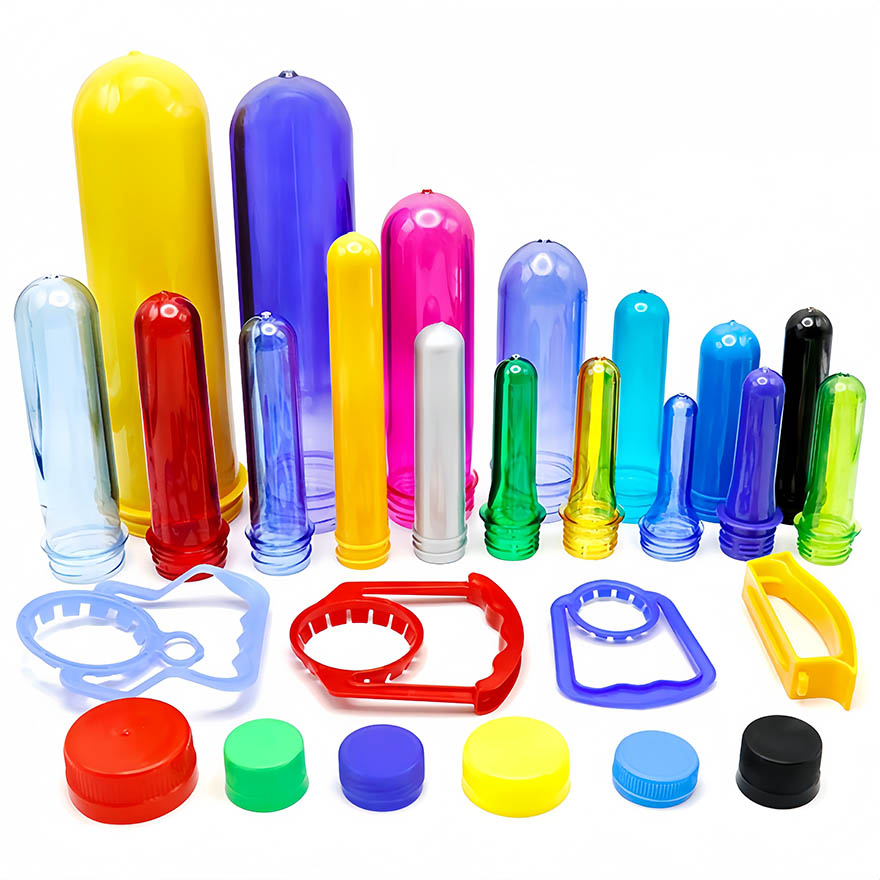
In the competitive world of plastic packaging, visual appeal is just as important as functionality. Colored PET preforms have emerged as a game-changer for brands looking to differentiate their products on the shelf. Whether it’s a opaque white lotion bottle, a vibrant green juice container, or a trendy matte black cosmetics jar, the journey begins with a colored preform.
This article explores the intricacies of colored preform production, the specialized molds required, and the various manufacturing techniques used to create stunning, high-quality bottles.
What is a Colored Preform?
A preform is the intermediate product in the injection stretch blow molding (ISBM) process. It looks like a test tube with a threaded neck—the final shape of the bottle’s closure. A colored preform is simply a preform made from polyethylene terephthalate (PET) resin mixed with colorants.
These preforms are heated and blown into their final shape using high-pressure air. By coloring the preform itself, manufacturers achieve a uniform color distribution throughout the bottle wall, preventing scratches from revealing a different underlying color.
Why Use Colored Preforms?
UV Protection: Certain colors (like green and amber) offer protection against UV light, preserving the quality of light-sensitive products such as beer, essential oils, and pharmaceuticals.
Brand Identity: Custom colors allow brands to match specific Pantone codes, ensuring consistency across their entire product line.
Aesthetics: Opaque or pearlescent colors give a premium, high-end feel that clear bottles cannot achieve.
Light Filtering: Colored bottles can filter specific light wavelengths to protect the contents from degradation.
Manufacturing Methods for Colored Preforms
Producing colored preforms is more complex than producing clear ones. Manufacturers must ensure the color is perfectly mixed without compromising the structural integrity of the PET. Here are the primary methods:
1. Masterbatch Dosing (The Most Common Method)
This process involves using natural (clear) PET resin and mixing it with color masterbatch—a concentrated mixture of pigments or dyes encapsulated in a carrier resin.
The Process: A precise dosing machine feeds the masterbatch into the throat of the injection molding machine, where it mixes with the natural PET melt.
Advantages: High flexibility. Manufacturers can switch between colors quickly and use the same base resin for different orders. It also allows for "food-grade" compliance by using approved masterbatches.
2. Pre-Colored Resin
In this method, the resin manufacturer produces PET that is already colored in its raw material form.
The Process: The polymer is colored during the polymerization stage.
Advantages: Superior color consistency and dispersion. Ideal for large-volume runs where the exact same shade is required for millions of preforms.
3. Liquid Color Dosing
Similar to masterbatch, but using liquid pigments.
The Process: Liquid color pumps inject the pigment directly into the machine barrel.
Advantages: Better dispersion for hard-to-color engineering resins and often lower dosage rates, saving costs on high-volume runs.
The Role of the Mold in Colored Preform Production
Creating a colored preform requires high-precision injection molds. The mold is responsible for shaping the molten PET and the colorant into a perfectly clear (or colored) preform with optical precision.
Key Features of Colored Preform Molds:
Hot Runner Systems: The mold must have a balanced hot runner system to ensure that the molten, colored PET flows into every cavity at the same temperature and pressure. In colored production, "flow lines" or uneven color distribution can occur if the melt cools prematurely.
Cooling Circuit Design: Efficient cooling is critical. Because colored PET may retain heat differently than clear PET, the cooling channels in the mold must be designed to extract heat uniformly. This prevents "crystallization" (cloudiness) in specific areas of the preform.
Cavity Finish: The surface finish of the mold cavity determines the surface of the preform. For glossy colored bottles, the mold must be mirror-polished. For matte or frosted effects, the mold can be textured via electrical discharge machining (EDM).
Venting: Proper venting is essential to allow air to escape. If air is trapped, it can burn the organic pigments in the colorant, creating black specks or "gas burns" in the preform.
Challenges in Manufacturing Colored Preforms
Color Consistency: Matching the color from the start of a production run to the end can be difficult. Factors like temperature fluctuations can alter the final shade.
Material Transition (Purge): Switching from black preforms to clear preforms requires extensive purging of the machine. Special cleaning compounds are used to flush the old color out of the barrel and hot runner to prevent contamination.
Crystallization: Some color additives can act as nucleating agents, causing the PET to crystallize faster than desired, leading to opaque or white spots.
The Future: Multi-Layer and Special Effect Preforms
The technology is moving beyond solid colors. Today, manufacturers are using advanced molds to create multi-layer preforms (combining colored barrier layers with clear structural layers) and special effect preforms that include glitter, marble effects, or even thermochromic pigments that change color with temperature.
Conclusion
Colored PET preforms offer an incredible opportunity for product differentiation. However, achieving the perfect shade and quality requires a deep understanding of polymer science, precise dosing equipment, and high-quality, well-maintained injection molds. By mastering these elements, manufacturers can produce packaging that not only protects the product but also sells it.