
In the world of modern packaging, PET (Polyethylene Terephthalate) has emerged as the material of choice for billions of bottles and containers worldwide. From carbonated soft drinks and water to pharmaceutical packaging and personal care products, PET’s unique combination of clarity, strength, lightweight nature, and full recyclability makes it an unparalleled polymer .
At the heart of every PET bottle is its precursor: the PET preform. This injection-molded component, resembling a miniature test tube with a threaded neck, holds the blueprint for the final container . The journey from PET resin to a high-quality bottle is a precise science involving sophisticated machinery, carefully controlled parameters, and a deep understanding of material behavior.
This comprehensive guide provides a detailed overview of PET preform and bottle manufacturing, covering the key processes, critical parameters, troubleshooting techniques, and solutions for achieving optimal results.
Understanding the PET Manufacturing Ecosystem
PET bottle production is generally executed through two primary methodologies: the Single-Stage and Two-Stage processes. Choosing the right one depends on production volume, bottle design complexity, and budget.
1. The Two-Stage Process (Reheat Stretch Blow Molding)
This is the most common method for high-volume production . It separates the process into two distinct steps, often at different locations.
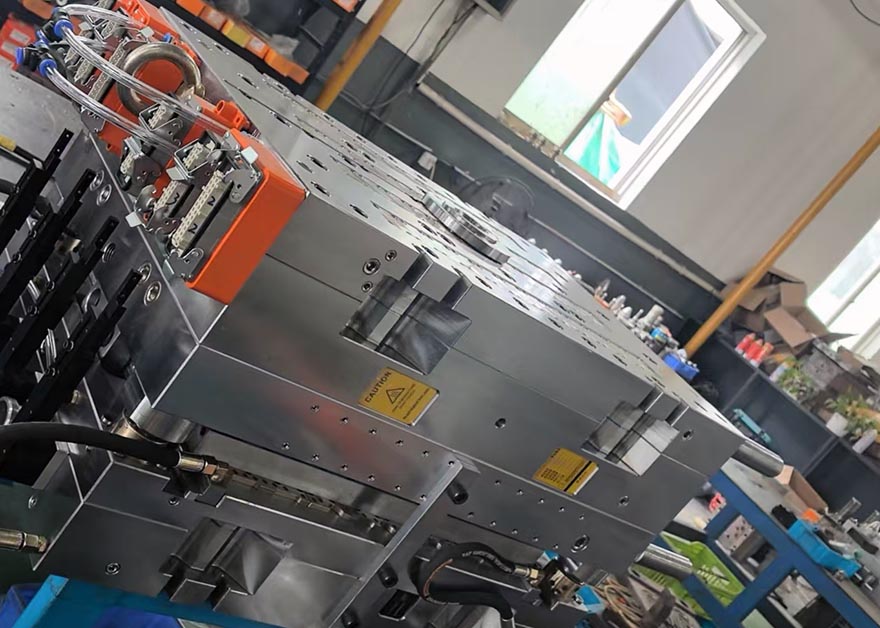
Step 1 - Preform Injection Molding: PET resin is dried, melted, and injected into a multi-cavity mold to create preforms. These preforms are cooled rapidly and stored.
Step 2 - Reheat Stretch Blow Molding (ISBM): The cooled preforms are fed into a stretch blow molding machine, reheated using infrared lamps above their glass transition temperature, and then stretched and blown into their final shape within a bottle mold .
Advantages: Extremely fast cycle times for blowing, high output rates (up to 72,000 bottles/hr), flexibility in production (preforms can be made and stored for later use), and excellent for round bottles .
2. The Single-Stage Process
In this integrated method, all steps from resin to finished bottle occur within a single machine .
Process: The preform is injection molded and, while still hot and conditioned, is immediately transferred to the blow station within the same machine to be formed into a bottle .
Advantages: Ideal for complex shapes (non-round bottles), smaller production runs (under 35 million bottles per year), and produces blemish-free bottles with the ability to orient threads for dispensing caps .
Phase 1: PET Preform Injection Molding – Getting It Right from the Start
The quality of the final bottle is irrevocably determined by the quality of the preform. Defects at this stage will translate to failures during the blowing process .
Key Design Elements of a Preform
Designing a preform is an engineering challenge that dictates how the material will flow and stretch.
Shape and Size Optimization: The length of the preform determines the bottle's height (axial stretch ratio), while its core diameter determines the bottle's width (hoop stretch ratio) . The transition zones must be smooth to facilitate even material distribution.
Neck Finish: This is the most technically precise area. It must be designed to match specific closure standards (e.g., PCO 1810, 28/400) to ensure a leak-proof seal .
Wall Thickness: The preform wall thickness is calculated by multiplying the desired bottle wall thickness by the biaxial stretch ratio. For carbonated beverages requiring high-pressure resistance, preforms are designed for thicker final walls (0.8–1.0mm), while still water bottles can use thinner walls (0.4–0.6mm) to save material .
The Injection Molding Process
Drying: PET is hygroscopic, meaning it absorbs moisture from the air. Before processing, the resin must be dried to prevent hydrolysis, which degrades the polymer and causes defects like poor clarity and brittleness .
Injection: The dried, molten PET (typically at 270–290°C) is injected under high pressure (800–1500 bar) into a cooled steel or aluminum mold .
Cooling & Ejection: Efficient cooling is critical. Advanced molds utilize conformal cooling channels that follow the contour of the preform to ensure uniform heat extraction, minimizing warpage and reducing cycle times . Once solidified, the preforms are ejected.
Phase 2: Stretch Blow Molding – Transforming Preform to Bottle
This is where the preform "blooms" into its final shape. The PET Stretch Blow Molding Machine must be meticulously optimized to avoid defects .
1. The Heating Stage: Conditioning the Preform
The preform is reheated in an oven. Unlike the body, the neck finish remains crystallized and must be kept cool to prevent deformation.
Critical Control: Different parts of the preform (shoulder, body, bottom) require different amounts of heat. Infrared lamps must be adjusted to create a specific "thermal profile."
Overheating leads to soft preforms, neck deformation, and bottle whitening.
Underheating causes incomplete stretching and uneven walls.
If whitening occurs, reduce shoulder heating and extend preheat time.
2. The Stretching and Blowing Stage
The heated preform is placed into the bottle mold. A stretch rod mechanically stretches it axially (lengthwise), while high-pressure air blows it radially (outward) to take the shape of the cavity. This biaxial orientation aligns the polymer chains, giving PET its remarkable strength and barrier properties .
Pre-blow (Low Pressure): Initiates the bubble formation.
High-Pressure Blow (20-40 bar): Forces the PET against the mold walls to capture intricate details.
Incorrect pre-blow timing is a major cause of poor material distribution.
Slightly delaying the pre-blow can help form the shoulder before full expansion.
Low pressure results in incomplete bottom expansion.
3. The Cooling Stage: Locking in the Shape
Once the bottle is formed, it must be cooled to set the molecular orientation and prevent shrinkage or distortion.
Optimization Tips : Maintain the chiller outlet temperature between 7°C and 12°C. Ensure consistent water flow through the mold channels to avoid localized hot spots.
Common Defects and Troubleshooting
Even with the best equipment, issues can arise. Here is a quick troubleshooting guide for common problems.
In Preform Molding
Bubbles / Voids: Usually caused by moisture in the resin (insufficient drying) or trapped air during injection. Solution: Check dryer performance and adjust injection speed/back pressure.
Crystallization / Haze: Often due to the melt temperature being too low or the preform cooling too slowly. Solution: Increase melt temperature and ensure mold cooling channels are efficient.
Gate Stringing: Excess material at the gate tip. Solution: Increase decompression (pullback) time or adjust the valve gate close delay timer.
In Blow Molding
Uneven Wall Thickness / Asymmetry: Caused by improper preform heating (hot or cold spots). Solution: Adjust the infrared lamp profile to ensure even heat distribution.
White Shoulders / Stress Crystallization: Occurs when the preform shoulder is too hot during stretching, causing it to thin out and turn white. Solution: Reduce heating intensity at the preform shoulder.
Bottom "Navel" Effect: A small nipple of excess material at the base. Solution: Lower the bottom lamp intensity or increase base cooling.
The Rise of Sustainability: Integrating Recycled Content (rPET)
As the world moves toward a circular economy, the use of Recycled PET (rPET) is no longer optional but a necessity . However, processing rPET comes with challenges, as it can contain impurities or degraded polymer chains.
Challenge: rPET may have inconsistent intrinsic viscosity (IV) or contain contaminants that cause discoloration (yellowing) or blockages in machinery .
Solution: Processors must invest in sophisticated material analysis systems, metal detectors, and foreign object sorters. These systems protect the injection molding machines from damage caused by metallic contaminants and ensure the final preforms meet food-grade quality standards .
Conclusion
PET bottle manufacturing is a high-precision interplay of material science, mold engineering, and machine control. By understanding the nuances of preform design, mastering the parameters of the injection and stretch blow molding processes, and embracing sustainable practices like rPET integration, manufacturers can produce high-quality, cost-effective, and environmentally responsible packaging.
Whether you are setting up a new production line or optimizing an existing one, focusing on the critical details of heating, blowing, and cooling will ensure your place at the forefront of the packaging industry.