
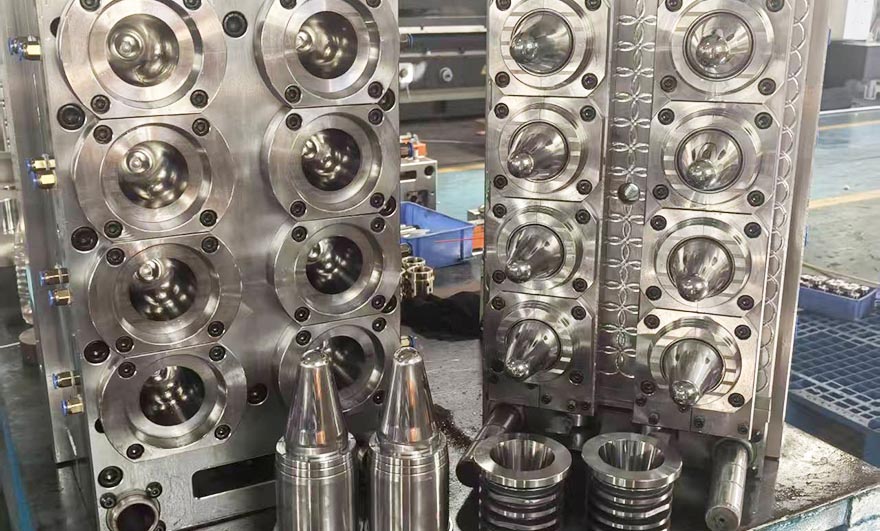
Investing in a PET preform mold is one of the most significant decisions a packaging manufacturer can make. A high-quality mold can mean years of efficient, trouble-free production, while a poor-quality mold can lead to constant downtime, high scrap rates, and lost revenue.
At GUTEWEI, we have spent decades specializing in the design and manufacture of precision PET preform molds. Based on our extensive experience, here are the five critical factors every buyer should consider before placing an order.
1. Cavitation vs. Machine Compatibility
The
first decision is how many preforms you want to produce per cycle
(cavitation). While high-cavitation molds (e.g., 72, 96, or 144
cavities) offer the highest output, they require very large injection
molding machines with high clamping force and plasticizing capacity.
Key Consideration: You must match the mold design to your existing machinery or be prepared to invest in new equipment. GUTEWEI works closely with clients to design molds that maximize output without exceeding the specifications of their injection molding machines.
2. Cooling System Design (Thermal Management)
Approximately
80% of the injection molding cycle time is spent cooling the preform.
The efficiency of the cooling system is the single biggest factor
affecting your production speed.
Key Consideration: Look for molds with advanced "controlled cooling" technology. Traditional straight-line cooling is less effective. GUTEWEI utilizes 3D cooling designs that follow the shape of the preform, removing heat rapidly and uniformly. This reduces cycle times and improves preform quality (crystallinity and clarity).
3. Steel Quality and Wear Resistance
The
mold will endure millions of cycles under high pressure and
temperature. The choice of steel determines how long the mold will hold
its critical dimensions.
Key Consideration: Ensure the mold maker uses high-quality, corrosion-resistant stainless steel. For high-wear areas like the neck rings and gate insert, look for hardened tool steels or even carbide coatings. This is especially important if you plan to use rPET, which can be more abrasive than virgin resin.
4. Precision of the Neck Finish
The
neck finish is the most dimensionally critical part of the preform. If
the neck is out of spec, the cap will leak, or the bottle won't fit
filling lines.
Key Consideration: Ask about the manufacturer's quality control process. At GUTEWEI, we machine all neck rings and cavities to micron-level tolerances and use CMM (Coordinate Measuring Machine) inspection to verify that every dimension meets international standards (PCO, BPF, etc.).
5. Vendor Experience and Technical Support
A
mold is not just a product; it is an engineering solution. The best
molds come from manufacturers who understand the interaction between the
mold, the machine, the resin, and the final bottle design.
Key Consideration: Choose a partner like GUTEWEI that offers more than just steel. We provide preform design consultation, processing advice, and rapid spare parts support. A supplier with deep technical knowledge can help you troubleshoot issues and optimize your production line long after the sale is complete.
Conclusion
Selecting
a preform mold is a balancing act between initial cost, output
efficiency, and long-term durability. By focusing on these five
factors—cavitation, cooling, steel, neck finish precision, and technical
support—you can ensure that your investment delivers a strong return
for years to come. At GUTEWEI, we build our molds to meet the highest
standards in every category.